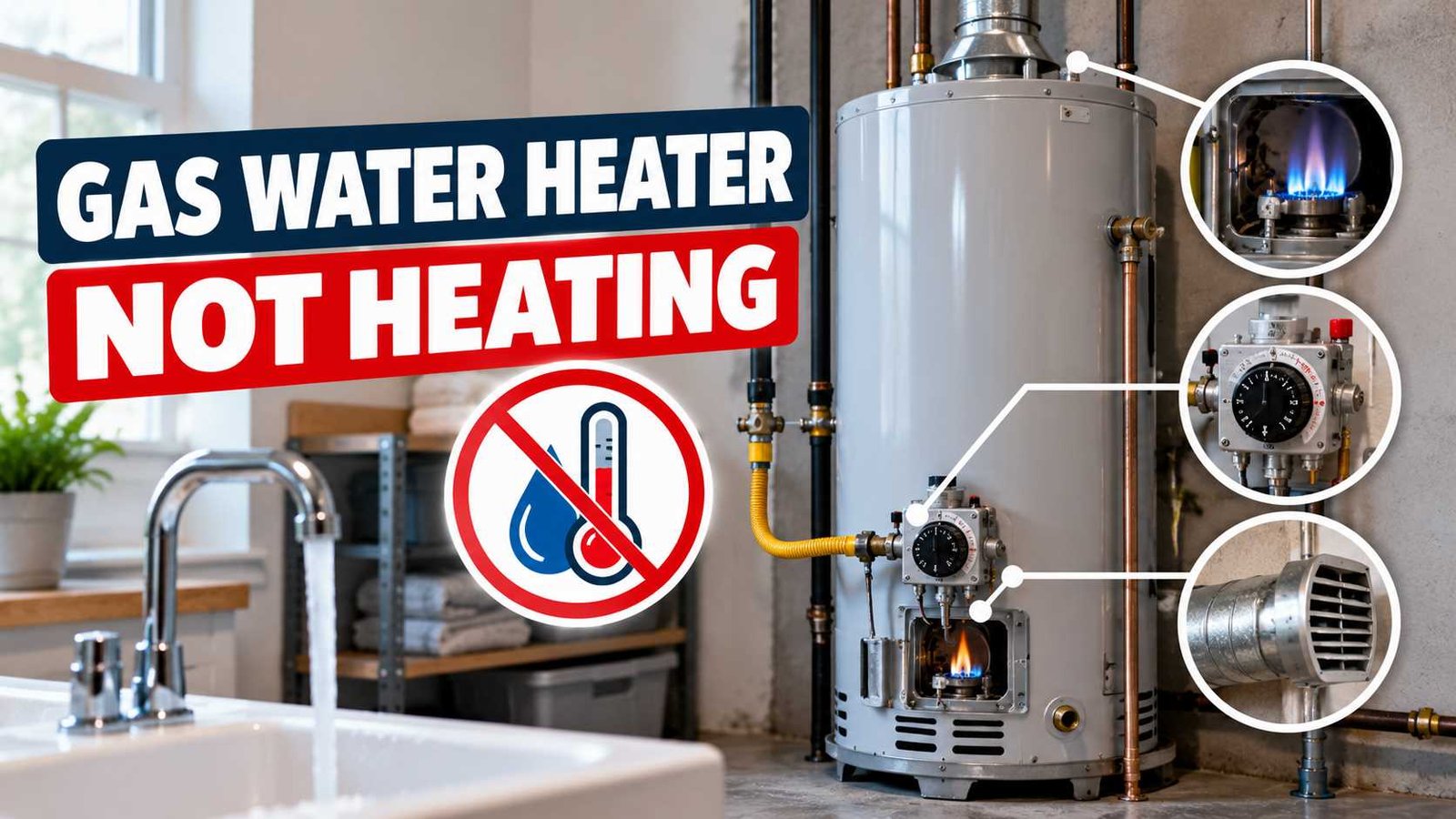
 If your gas water heater is not heating, first check whether every hot-water tap is affected and whether the heater’s external control is set to its normal operating temperature. On a conventional storage-tank model, an extinguished pilot, an unusual status-light pattern or a burner that does not operate may explain the loss of heat. These observations help narrow the issue, but they do not confirm a defective gas valve or other part.
Stop immediately if you smell gas, hear hissing near gas piping, see soot or signs of scorching, or suspect a combustion or venting problem. For a gas smell, leave the building without operating switches, phones or flames inside; from outdoors, contact your gas utility or emergency services. If a carbon monoxide alarm sounds, get everyone into fresh air and call emergency services. Do not investigate the appliance yourself.
First, Find Out Whether the Heater or a Fixture Is at Fault
Carefully test the hot side at two or three faucets without exposing anyone to potentially scalding water. If one shower runs cold but another faucet delivers normal hot water, the shower mixing cartridge, anti-scald control or local plumbing may be responsible. Do not adjust the gas heater to compensate for a single faulty outlet.
If every outlet delivers cold water, look at the heater from the outside. Note the full model number, whether it is a storage-tank or tankless model, the control setting and any status light or fault code. Avoid removing a burner cover or reaching into the combustion chamber.
Check the Gas Water Heater Temperature Setting
A control set to OFF, PILOT, VACATION or a low-temperature setting may account for little or no hot water. Only use controls clearly designated for normal homeowner operation, and check the label or owner’s manual before changing a setting. Gas-control knobs and electronic interfaces differ among A. O. Smith, Rheem, Bradford White and other manufacturers.
For many homes, a delivered hot-water temperature around 120°F (49°C) is a commonly recommended scald-reduction target, but storage settings, mixing valves and local water-hygiene requirements can differ. Turning the dial excessively high is not a safe way to force quicker recovery. Seek qualified advice where stored-water temperature requirements or vulnerable household members make temperature management more complicated.
Gas Water Heater Pilot Light Out or Not Staying Lit
Some tank-style gas heaters have a standing pilot visible through a small observation window, while others use electronic ignition and have no continuously burning pilot. Check the appliance’s design before expecting to see a flame. A missing pilot or an unlit status indicator may be a clue, but neither identifies a failed thermocouple by itself.
What to check without opening the combustion area
Read the lighting and warning label attached to the tank. If its instructions are missing, damaged or unclear, contact the manufacturer or a qualified gas technician. Do not use a match, improvised igniter or another model’s lighting sequence. If the manufacturer permits an owner to relight the pilot, its printed instructions take priority and must be followed exactly; do not attempt relighting when there is any smell of gas or evidence of a venting fault.
If the pilot repeatedly goes out, stop relighting attempts. A pilot assembly, flame-sensing device, combustion-air issue or gas control may require testing. Safety devices must never be bypassed, and gas fittings must not be loosened for an experiment.
Pilot Is Lit but There Is Still No Hot Water
A visible pilot flame does not mean the main burner is heating the tank. First confirm that the appliance is actually calling for heat and that enough time has passed after heavy hot-water use. The response depends on tank capacity, incoming water temperature and burner operation.
On certain A. O. Smith and Whirlpool-branded gas water heater controls, a single status-light flash roughly every three seconds indicates normal pilot/control status. That pattern is not universal. Count the flashes and compare them with the chart for the exact model instead of borrowing a code interpretation from another heater.
If the pilot remains lit but water stays cold despite the normal setting and reasonable recovery time, a thermostat, gas control, main-burner or other component may need professional diagnosis. Do not remove the sealed burner assembly or try to adjust gas pressure.
What If the Heater Has a Flashing Status Light or Error Code?
Record the exact blink sequence, color or displayed letters and numbers before any permitted acknowledgment. Some patterns simply indicate normal operation; others indicate lockout or a safety-related fault. The same number of flashes can have different meanings across gas controls and model generations.
Look up the pattern in your model’s own manual. A recurring lockout, abnormal combustion warning, overheating indication or other safety fault is a reason to stop and arrange qualified service rather than repeatedly resetting the heater.
Use the Symptoms to Choose the Next Safe Action
| What you notice | What it may suggest | Next step |
|---|---|---|
| Cold water at every hot tap | Heater-wide heating or supply problem | Check visible control setting and model-specific status indicator |
| Only one shower or faucet runs cold | Local mixing valve or fixture problem | Compare other outlets and seek plumbing service for that fixture |
| Pilot out on a standing-pilot model | Ignition or gas-control issue | Read the on-appliance instructions; do not improvise relighting |
| Pilot repeatedly goes out | Flame-sensing, control or combustion-air fault | Stop repeated attempts and book qualified service |
| Pilot lit but no hot water | Burner not heating, setting or control problem | Verify setting and recovery time; seek professional diagnosis |
| Some hot water, then quickly cold | High demand, limited recovery, plumbing or tank issue | Compare demand with heater capacity and note how long hot water lasts |
| Gas odor, soot or CO alarm | Potentially dangerous gas or combustion issue | Leave the area and contact emergency or gas services |
Why Hot Water Runs Out Too Quickly
If the heater delivers hot water initially but runs cold during a shower, the burner may still be working. A storage tank has a finite usable hot-water capacity; consecutive showers, a high-flow fixture or unusually cold incoming water can exceed its recovery rate. Check whether the change started suddenly or follows increased household demand.
When the shortage occurs even with ordinary usage, a technician may evaluate the thermostat, sediment accumulation, dip tube, mixing valve or plumbing cross-connection as appropriate to the model. Rumbling noises can accompany sediment buildup, but the noise alone is not enough to diagnose the problem. Do not flush a leaking, unstable or unfamiliar gas heater without its maintenance instructions and suitable expertise.
What If a Gas Tankless Water Heater Is Not Heating?
Tankless units behave differently from storage tanks. Some require minimum water flow to ignite; blocked inlet screens, flow-sensor issues, power interruptions or displayed fault codes may prevent heating. Confirm that the appliance is powered and that hot-water demand is sufficient according to its manual. Do not remove combustion covers or clean internal gas components.
For a tankless error code, use the exact manufacturer and model documentation. A storage-tank pilot-light procedure is not an appropriate troubleshooting method for an electronic-ignition tankless heater.
How Long Should a Gas Water Heater Take to Reheat?
Recovery is not one fixed number. Storage capacity, burner input, incoming water temperature and how much hot water was used all change the time required. Some tanks can take an hour or more to restore substantial hot-water capacity; do not promise a precise recovery time without the heater’s specifications.
If the appliance appears to operate normally, reduce simultaneous hot-water use and check whether temperatures recover. If the whole house remains cold after a reasonable period, stop repeating control changes and seek service. Never increase the temperature beyond safe requirements to conceal a heating fault.
When to Call a Licensed Gas Technician
Arrange professional service when the pilot will not remain lit, the status light shows a recurring fault, the burner will not heat despite normal settings, hot-water loss persists or the appliance leaks around the tank. Internal ignition components, gas valves, venting, flame sensors, combustion-air systems and gas-pressure adjustments require appropriate training and equipment.
Schedule periodic inspection according to the manual and local requirements, and maintain working carbon monoxide alarms. If anyone experiences headache, dizziness, nausea or confusion alongside a possible combustion problem, leave the building and seek urgent medical help. Carbon monoxide has no smell, so absence of a gas odor does not rule it out.
Before contacting a technician, write down the model and serial number, whether all taps are affected, any blink code, the control setting and whether the problem is constant or happens after heavy hot-water use. This information is more useful than guessing which part has failed.

Ahmad Raza is the website administrator and content operations manager at Error Code Vault. With 11 years of experience in technical publishing, he manages site accuracy, author verification, source quality, updates, user feedback, and editorial compliance.