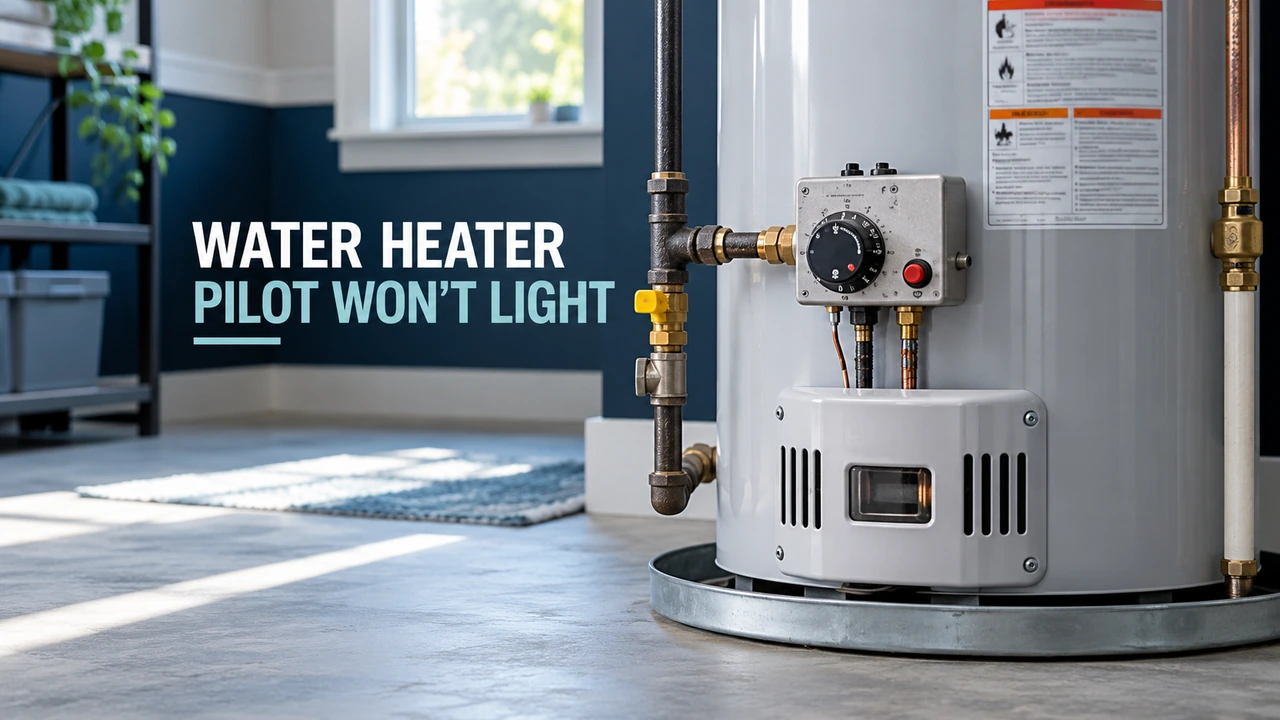
 If the pilot light on your gas water heater will not light, first check whether the heater has a standing pilot at all and read the lighting instructions attached to your exact model. A control left in the wrong position, unavailable gas supply or an ignition problem can prevent a pilot from lighting. If the flame appears but goes out as soon as you release the control, the cause may instead involve flame sensing or a gas-control safety system.
Do not attempt ignition if you smell gas. Leave the building, avoid electrical switches, flames and phones inside the affected area, and contact the gas utility or emergency services from outside. If the heater has been flooded, its viewing window is damaged, the burner area shows scorching, or you suspect blocked exhaust gases, stop using it and contact a qualified gas technician. Never bypass a gas safety device.
First identify which pilot-light problem you have
A pilot that never produces a visible flame is different from one that lights briefly but will not stay lit. A pilot that remains lit while the main burner never starts is a third problem. Each directs a technician toward a different check, and none can be reliably diagnosed from the absence of hot water alone.
| What you observe | Possible explanation | Safest next action |
|---|---|---|
| No flame or status-light response during an approved lighting attempt | Gas supply, control position, igniter or pilot assembly problem | Check only the label and accessible external controls; stop if the approved procedure fails |
| Pilot lights but goes out when the button is released | Flame-sensing or gas-control safety fault | Stop repeated attempts and arrange gas-appliance service |
| Pilot stays lit but main burner does not heat water | Thermostat, gas control or burner-related issue | Check the normal temperature setting; request diagnosis if unchanged |
| Unusual soot, exhaust odor, scorch marks or repeated thermal shutdown | Potential ventilation or combustion hazard | Stop use and call a qualified gas technician |
Check the heater’s label before touching the gas control
Traditional tank water heaters may have a continuously burning standing pilot, a push-button spark igniter and a small viewing window. Other gas water heaters use electronic ignition without a standing pilot; some tankless units do not have a pilot to relight. Look up the complete model number rather than following a generic video for a different burner and control valve.
The lighting label on the heater and its owner’s manual take priority over online instructions. A. O. Smith and other manufacturers publish model-specific sequences, including control settings, waiting periods and status-light behavior. Do not assume one waiting time, number of igniter clicks or indicator-light pattern applies to every water heater.
Safe checks before trying the manufacturer’s lighting instructions
- Check for a gas smell before doing anything else. A suspected leak means leave immediately and call for help from a safe location; do not attempt a pilot relight.
- Inspect the appliance from outside. Look for obvious water damage, scorching, a broken sight glass or blocked ventilation openings. Do not open a sealed combustion chamber or remove the inner burner door.
- Confirm the correct control identification. Find the printed lighting label and identify the gas control and igniter only as described there. Do not force a stuck knob.
- Check an accessible, clearly identified shutoff only when safe. If the manual permits checking the external gas valve, confirm its position without moving the heater or disturbing pipe fittings. If unsure, call your gas supplier or technician.
- Follow the exact printed procedure only if all safety conditions are met. Respect its required OFF and waiting periods, ignition limits and stop conditions. If instructions are illegible or unavailable, do not guess.
If the approved procedure does not light the pilot within the manufacturer’s permitted attempts, stop. Repeated clicking or holding a control indefinitely can create risk and is not a substitute for investigating the cause.
Why the water heater pilot will not spark or ignite
On models with a built-in piezoelectric igniter, a worn ignition mechanism or a problem at the pilot assembly can prevent reliable lighting. Gas also needs to reach the pilot at the proper pressure. A blocked pilot orifice or restricted pilot tube is a possible service finding, but owners should not poke a wire into the orifice, loosen the gas tubing or remove the burner assembly.
Some viewing windows make a small pilot flame hard to see. Where fitted, the control’s status indicator may offer additional information. Use only the blink pattern defined for your model; a light that fails to flash is not universal evidence of a specific defective component.
Why the pilot lights but will not stay lit
If the flame lights while the pilot control is held and disappears as soon as it is released, the flame-safety circuit may not be receiving the expected signal. Older designs can use a thermocouple; other water heaters use a thermopile or a different flame-sensing and gas-control arrangement. A weak pilot flame, interrupted electrical connection, or faulty safety control may produce a similar symptom.
Do not bend a thermocouple into the flame, bypass the safety valve, bridge connectors or hold the pilot control down with a tool. These parts prevent unburned gas from flowing when ignition is unsafe. A technician should identify the specific control system and test it using the appropriate service information.
Could a tripped thermal switch or blocked air intake be responsible?
Some gas water heaters include an air-intake screen, flame arrestor or thermal safety switch. Manufacturers such as A. O. Smith note that insufficient combustion air can contribute to thermal-switch operation on certain models. Dust, lint and poor installation clearances may be relevant, but a tripped switch is a symptom that requires the cause to be corrected.
Keep stored goods, household chemicals and combustible clutter away from the heater according to its clearance instructions. Do not cover combustion-air openings or try to reset a hidden switch, remove the sealed burner door or alter venting. Where the manufacturer permits exterior screen cleaning, follow that model’s directions. For recurring shutdowns or uncertain ventilation, arrange professional inspection.
What if the pilot stays lit but there is still no hot water?
The pilot’s job is to ignite the main burner; seeing a pilot does not prove the burner is operating. Check the normal temperature control setting and whether the heater has recently exhausted its stored hot water. Give a functioning tank time to recover according to its manual. If the main burner never starts despite a lit pilot and appropriate setting, a gas-control, thermostat or burner-related fault needs professional assessment.
If hot water is merely lukewarm rather than completely absent, a mixing valve, high demand or sediment problem may also be relevant, depending on the plumbing setup. Do not raise the thermostat sharply to compensate: excessively hot water can scald.
Why the pilot keeps going out after being relit
Repeated loss of the pilot after an apparently successful relight is a reason to stop trying, not to keep restarting it. Poor combustion airflow, a flame-sensing issue, gas-supply instability or a control fault are possibilities. A qualified technician can check the gas pressure, burner operation, venting and model-specific safety devices.
Carbon monoxide cannot be identified reliably by smell. Maintain appropriate carbon monoxide alarms near sleeping areas according to local guidance, and seek urgent help if an alarm sounds or occupants develop unexplained headache, dizziness or nausea near a fuel-burning appliance. Move to fresh air and follow emergency guidance.
When should you call a professional?
Get qualified gas-appliance service when the pilot fails after the labeled procedure, goes out repeatedly, the gas control sticks, a status light signals a fault, or a combustion-air or vent problem is suspected. Never continue with an appliance that has a gas odor, flood damage, broken viewport, soot, scorch marks or suspected exhaust leakage.
Before making the call, note the manufacturer and full model number, whether the pilot sparks, whether a flame appears, whether it stays lit after releasing the approved control, and any exact indicator-light pattern. These observations allow model-specific diagnosis without guessing at a thermocouple or replacing a gas valve unnecessarily.
Bottom line: read the water heater’s own lighting label, check for immediate safety hazards, and distinguish a pilot that will not ignite from one that will not remain lit. If the approved procedure fails or the flame repeatedly goes out, stop and have the gas safety system inspected.

Daniel Brooks is a US-based appliance troubleshooting researcher with 12 years of experience studying washer, dryer, refrigerator, and dishwasher faults. He reviews manufacturer manuals and converts technical error codes into safe, practical guidance for homeowners.