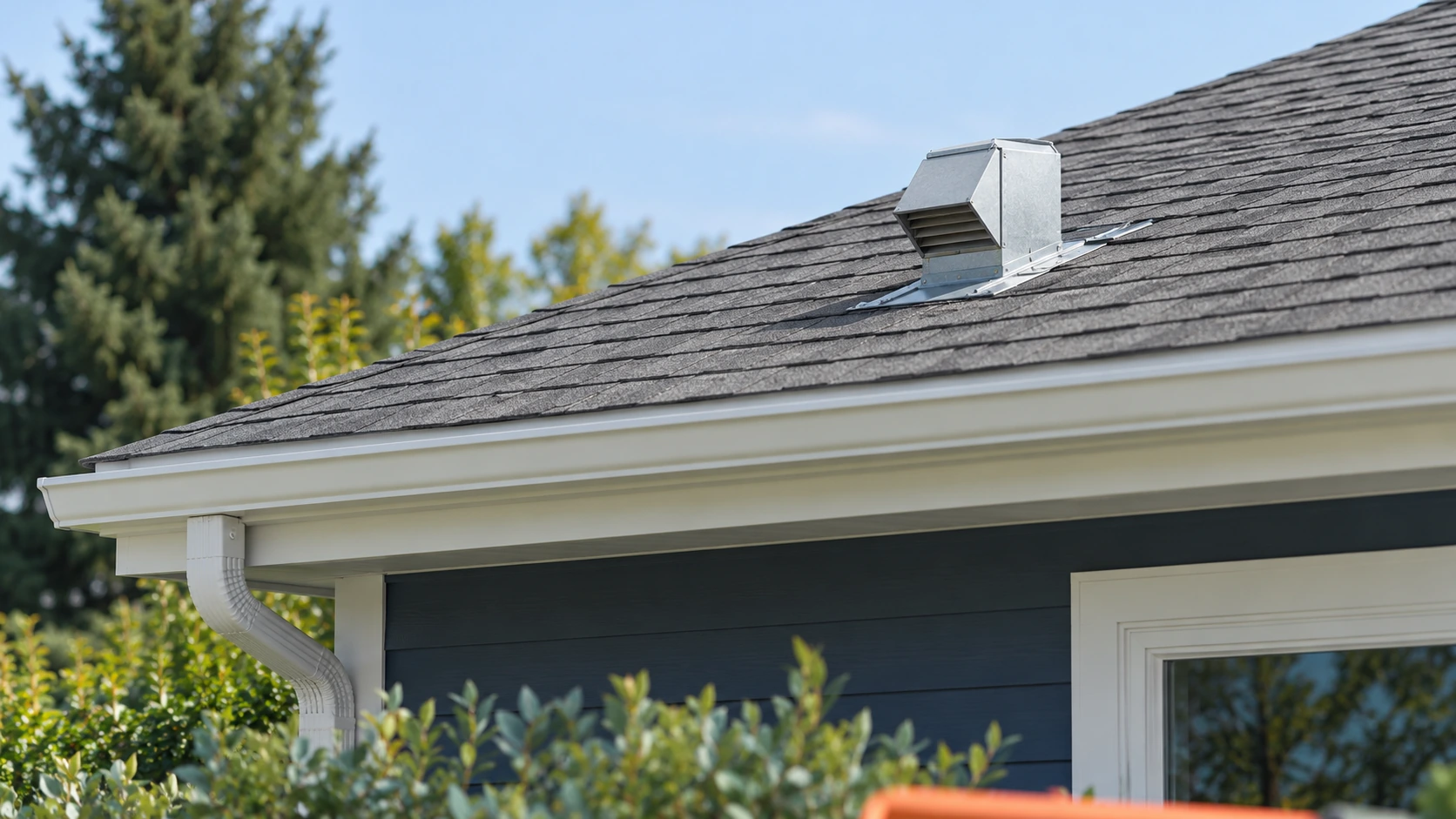
To clean a dryer vent that exits through the roof, arrange assessment and cleaning of the complete exhaust route, including the roof termination. Owner checks can address an accessible lint screen and visible duct condition, but they do not establish that the outlet above is clear.
Do not climb onto the roof or improvise ladder access for this task. If the dryer smells burnt or overheats, stop using it. Arrange appropriate help instead of running more loads while waiting for cleaning.
Confirm the route without entering unsafe areas
Use installation records or safe ground-level observation to identify where the dryer exhaust ends. Tell the provider when the route is uncertain; a roof fitting visible from below may serve another system.
The PNNL dryer-exhaust guide states that dryer exhaust should terminate outdoors rather than in an attic or crawlspace. A duct passing through an attic and one ending inside it are different arrangements. Have an uncertain installation assessed.
Complete only the accessible owner checks
- Clean the lint screen by the model’s documented method.
- Note any safely visible crushed, damaged or disconnected ducting.
- Record longer drying times and exact airflow warnings.
- Describe recent dryer replacement or changes around the laundry area.
Disconnect power before maintenance. Do not move a dryer in a way that strains its utilities, and do not disconnect gas lines to create working space. Inaccessible connections need qualified help.
The CPSC safety alert explains that lint restricting airflow can cause overheating. A clean screen is therefore useful, but it is not a substitute for checking the remaining exhaust route.
Include the roof termination in the service request
Ask how the provider will reach and assess the outlet safely. The written scope should identify the accessible transition duct, the building exhaust route and the termination, with any access limits made clear.
PNNL also warns that a screen over a dryer outlet can trap lint and block airflow. Ask the technician to check that the termination is appropriate, unobstructed and able to operate as intended. Leave removal, roof work and any correction to the suitable professional.
Separate cleaning from a damaged installation
If inspection finds a disconnected joint, unsuitable termination or crushed duct, ask for an explained repair proposal. Removing lint cannot correct every installation defect. Do not accept cleaning of the lower accessible section as proof that the roof end was inspected.
Request a record of what was reached, any remaining uncertainty and the completed checks under the appliance and installation instructions. Avoid promises that one cleaning permanently prevents blockages or fires.
Report a continuing drying problem
Use our long drying-time guide to compare the original complaint with the result after service. If slow drying, warnings or overheating continue, arrange further diagnosis of the route and appliance. Keep the service findings so the next assessment begins with evidence rather than another assumed blockage.

Ahmad Raza is the website administrator and content operations manager at Error Code Vault. With 11 years of experience in technical publishing, he manages site accuracy, author verification, source quality, updates, user feedback, and editorial compliance.