
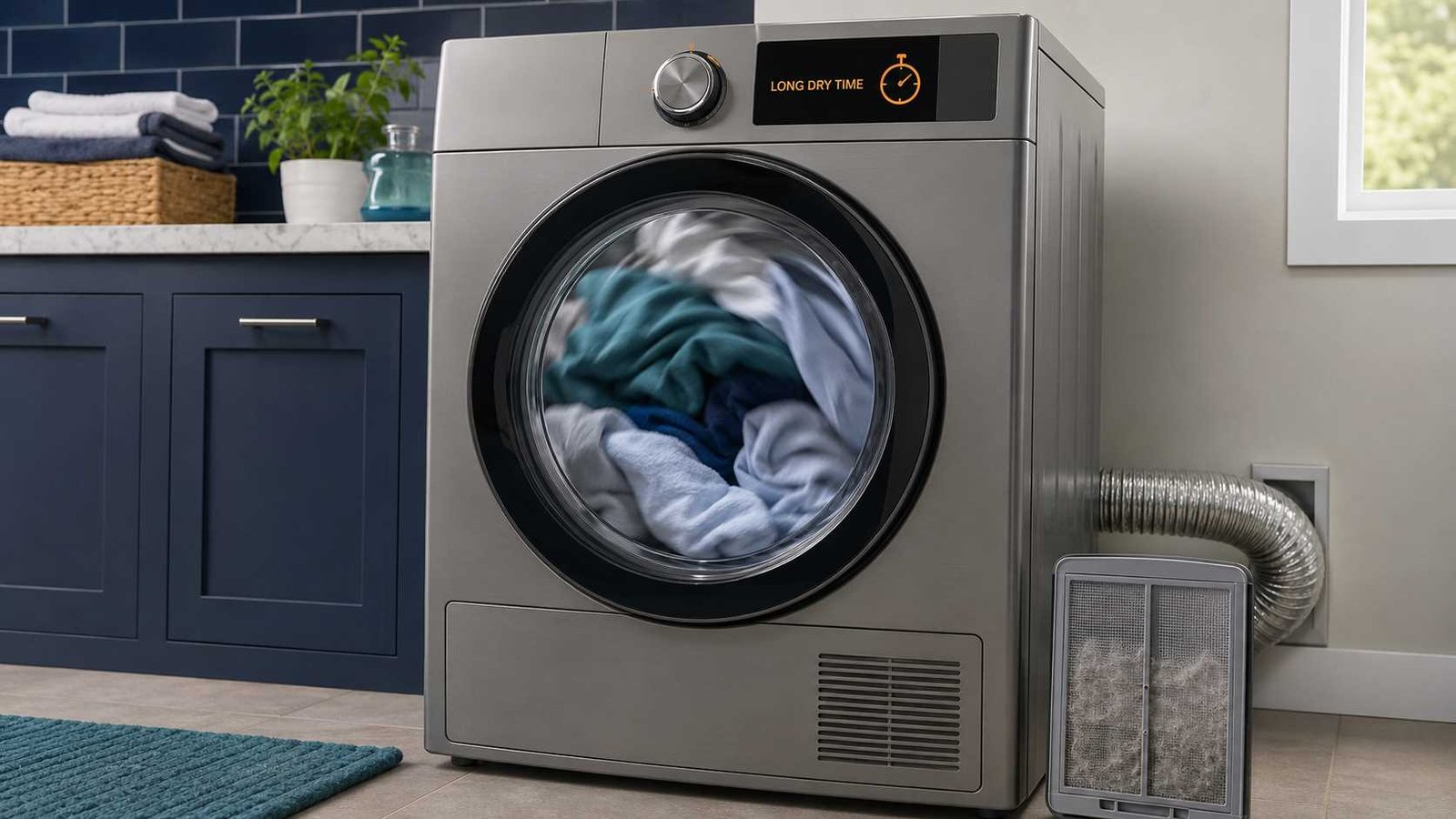
 A dryer that takes too long to dry clothes usually has restricted airflow, an unsuitable load, excessively wet laundry, or an incorrect cycle setting. If the dryer becomes hot but the clothes remain damp, check the lint filter and ventilation path first. If the clothes stay cold and wet, the dryer may not be producing heat.
Do not continue using the appliance if you notice a burning smell, smoke, sparking, repeated breaker trips, a gas smell, or unusually high cabinet temperatures. Restricted airflow can cause heat to build up inside a vented dryer, while electrical and gas faults require professional attention.
Start with the simple external checks below. Do not remove appliance panels, test live wiring, bypass safety devices, or work on internal gas components.
| Item | Guidance |
|---|---|
| Appliance | Clothes dryer or tumble dryer |
| Main symptom | Clothes remain damp or require repeated cycles |
| Most common cause | Restricted airflow through the lint filter or exhaust vent |
| Safe first check | Clean the lint filter and inspect the load and cycle setting |
| Other common causes | Wet laundry, overloading, mixed fabrics, dirty sensors or low-heat settings |
| Vented-dryer concern | Blocked, crushed or excessively long exhaust duct |
| Heat-pump dryer concern | Dirty filters, drainage issues, unsuitable room temperature or normal low-temperature operation |
| Repair difficulty | Usually easy for basic maintenance; moderate to advanced for internal faults |
| Can it still be used? | Only when there are no overheating, burning, electrical or gas-safety symptoms |
| Professional help | Needed when airflow is clear but heating or drying performance remains poor |
Official manufacturer guidance consistently identifies poor ventilation, clogged filters, load problems and unsuitable settings as common reasons for extended drying times.
Why Is My Dryer Taking So Long to Dry?
Drying clothes requires three things:
- Heat or another source of moisture removal
- Air movement through or around the laundry
- Enough tumbling space for damp fabric to separate
A problem with any one of these can extend the cycle.
In a traditional vented dryer, warm air passes through the clothes and carries moisture outside through the exhaust duct. If the duct is restricted, the dryer may still heat and tumble, but the humid air remains trapped.
A condenser or heat-pump dryer does not normally send damp air through an exterior wall vent. It removes moisture through a condensing system instead. These models may take longer by design because they often operate at lower temperatures, but blocked filters, full water containers, drainage problems or poor washer spinning can make the cycle much longer than normal.
What the Symptoms Can Tell You
The condition of the clothes and dryer can help narrow down the cause.
| Symptom | More likely explanation | Safe first check |
|---|---|---|
| Clothes are hot but damp | Restricted airflow or poor moisture removal | Clean the filter and check the vent or condenser system |
| Clothes are cold and damp | No heat, wrong cycle or supply problem | Confirm a heated cycle was selected |
| Towels dry slowly but shirts dry normally | Heavy fabrics, overloading or mixed loads | Dry similar fabrics together |
| Sensor cycle ends too early | Small load or dirty moisture sensor | Try a larger suitable load or timed cycle |
| Estimated time keeps increasing | Dryer is detecting more moisture than expected | Check load wetness, airflow and filters |
| Room becomes hot and humid | Vented dryer may be leaking or exhausting indoors | Stop and inspect the external vent arrangement |
| Dryer needs two cycles | Vent restriction, wet laundry or reduced heat | Follow the full troubleshooting order below |
| Heat-pump cycle lasts several hours | May be normal, but filters or load conditions may be affecting it | Compare with the manual and previous performance |
Clothes Feel Hot but Stay Damp
Hot clothes show that the dryer is producing at least some heat. The more likely problem is that moisture cannot leave the drum efficiently.
Common causes include:
- A lint filter covered with lint or invisible residue
- A crushed or kinked vent hose
- A blockage farther inside the household duct
- An overloaded drum
- Heavy and lightweight fabrics mixed together
- A dirty condenser or heat exchanger on an applicable model
Whirlpool notes that when a dryer heats but takes too long, restricted venting is a likely cause. A blocked vent prevents hot, moist air from leaving normally.
Clothes Stay Cold and Wet
Cold, damp clothes usually point toward:
- An Air Fluff or no-heat cycle
- An electric-supply issue
- A closed gas-supply valve on a gas dryer
- A heating-system fault
- A control or temperature-sensing problem
Some North American electric dryers use separate parts of the household electrical supply for tumbling and heating. This means the drum can sometimes turn even when the heater is not receiving the correct supply. Frigidaire advises checking the household breakers when an electric dryer runs without heat.
Do not open the electrical connection box or test voltage yourself.
Only Towels or Bedding Stay Damp
Towels, blankets, sheets and duvet covers hold more water than lightweight garments. Large items can also fold around smaller pieces and prevent them from tumbling freely.
Dry heavy fabrics separately. Pause the cycle when permitted, untangle large pieces and reposition them in the drum.
The Sensor Cycle Ends Too Soon
Automatic cycles use moisture sensors to estimate when the load is dry. A very small load may not contact the sensor consistently. Residue from detergent, fabric-care products or limescale may also affect sensor readings.
Bosch advises cleaning the moisture-sensor area according to the model instructions because residue can impair drying results. Avoid steel wool, sharp objects or unapproved chemicals.
The Displayed Time Keeps Increasing
A changing estimated time does not always indicate a fault. Sensor-controlled dryers adjust the remaining time according to factors such as:
- Initial moisture level
- Load size
- Fabric type
- Room temperature
- Airflow
- Selected dryness level
Electrolux explains that displayed drying time can change as the appliance recalculates the programme using actual load conditions.
A sudden and consistent increase compared with the dryer’s previous performance still deserves investigation.
Identify Your Dryer Type First
Not every dryer removes moisture in the same way.
Vented Electric Dryer
This type heats air electrically and exhausts moisture through a duct leading outside. Long drying times commonly involve the lint screen, exhaust hose, household duct or electrical heat supply.
Vented Gas Dryer
A gas dryer also requires an unobstructed outdoor exhaust. It may tumble without heating if the accessible gas shutoff valve is closed, but gas-supply and combustion-system diagnosis should be handled by a qualified professional.
Condenser Dryer
A condenser dryer collects moisture in a water container or sends it through a drain hose. It may have a user-accessible condenser that needs periodic cleaning.
Heat-Pump Dryer
A heat-pump dryer reuses heat and normally operates at a lower temperature than a conventional vented dryer. Cycles may feel longer, and freshly removed clothes may not feel as hot.
Check the filters, water tank, drain hose and any user-maintainable heat-exchanger area specified in the manual. Do not assume every heat exchanger can be removed or washed.
Washer-Dryer Combination
A washer-dryer combination has a smaller drying capacity than its washing capacity on many models. A full wash load may need to be reduced before drying.
Poor spinning or an unbalanced wash load can also leave the clothes excessively wet and produce very long drying times. GE notes that a reduced spin speed can leave more water in the fabric and extend the drying stage.
Safe Checks to Try First
Work through these steps in order.
1. Clean the Lint or Fluff Filter
Remove lint before every load.
A filter can look clean but still have a fine coating from fabric softener, dryer sheets or laundry products. This coating reduces airflow through the mesh.
When the manufacturer permits washing:
- Remove loose lint.
- Rinse or wash the filter as directed in the manual.
- Let it dry completely.
- Reinstall it correctly before operating the dryer.
Never run the dryer without its filter. Bosch and Whirlpool both recommend cleaning the filter after each cycle or use.
Replace a damaged filter rather than continuing to use it.
2. Adjust the Load Size
Clothes need space to lift, separate and fall through the moving air.
An overloaded drum restricts tumbling. A very small load may also perform poorly on a sensor cycle because the items do not contact the sensor often enough.
Try a medium-sized load of similar fabrics. Avoid combining thick towels with thin shirts or synthetic items.
Maytag and Frigidaire identify both load size and fabric mix as factors that can extend drying time.
3. Check the Cycle and Temperature
Confirm that you have not selected:
- Air Only
- Air Fluff
- No Heat
- A delicate low-temperature programme
- An energy-saving option that intentionally extends the cycle
- An unsuitable dryness level
Low heat is appropriate for many delicate garments, but it normally takes longer.
For thick cotton items, select the programme recommended by the garment labels and appliance manual. Do not use high heat on fabrics that prohibit it.
4. Check How Wet the Clothes Are After Washing
Before placing the load in the dryer, check whether the clothes are dripping, unusually heavy or much wetter than normal.
Possible washer-related causes include:
- A low spin-speed selection
- An unbalanced load
- A drain or spin problem
- Excess detergent causing poor spinning
- A bulky item that could not distribute evenly
Run an appropriate drain-and-spin or spin-only cycle when allowed by the washer instructions. GE confirms that a higher or extended spin removes more water and can reduce drying time.
5. Untangle Large Items
Sheets and duvet covers can wrap around smaller pieces, creating a damp bundle that dries unevenly.
Separate the items, shake them out and restart the correct programme. Do not force oversized bedding into a dryer that is too small for it.
6. Clean the Moisture Sensor
Check the owner’s manual for the sensor location and approved cleaning method.
The sensor is commonly found near the drum opening on automatic-cycle dryers. Clean only the accessible surface. Do not remove the sensor or open the cabinet.
If Timed Dry works normally but automatic cycles leave clothing damp, sensor contact, load size or sensor contamination may be involved.
Airflow Checks for a Vented Dryer
These checks apply only to dryers designed to exhaust outdoors.
Inspect the Hose Behind the Dryer
Switch the dryer off and unplug it if the plug is safely accessible. Do not move a gas dryer far enough to strain or disconnect the gas connection.
Look for:
- A crushed hose
- Sharp bends
- Excessive hose length
- Loose connections
- Visible lint at the connection
- Plastic or unsuitable foil ducting where rigid or semi-rigid metal is required
The installation requirements vary by model and country. Follow the appliance installation manual and local rules.
Check the Exterior Vent Hood
With the dryer running on a heated programme, observe the exterior vent from a safe location.
The flap should open and airflow should be noticeable. Weak airflow may indicate a blockage inside the duct, even when the short hose behind the dryer looks clean.
Clear only accessible lint or debris. Do not reach deeply into a concealed duct, climb onto a roof or dismantle building ventilation.
Consider the Full Vent Route
A blockage can develop:
- Inside a wall
- Under a floor
- In a ceiling space
- At a roof outlet
- Around multiple elbows
- Behind a bird or rodent guard
- Where the duct has partially collapsed
Cleaning only the first section may not solve the problem.
Whirlpool recommends professional inspection or cleaning when the household vent is obstructed or drying performance has declined.
Watch for Airflow Warning Codes
Selected dryers display messages such as:
- AF
- Restricted Air Flow
- Check Vent
- Flow Sense warnings
The exact meaning and test procedure vary by brand and model. Do not use a button sequence found for a different machine.
Whirlpool states that AF or Check Vent can indicate a clogged lint screen, crushed vent, kinked duct or excessive bends on applicable models.
Checks for Condenser and Heat-Pump Dryers
Empty the Water Container
A full container can interrupt drying or reduce performance on applicable models.
Empty it and reinstall it fully. If the dryer is connected to a drain, confirm that the drain arrangement matches the manual.
Check the Drain Hose
Look for an external kink, trapped section or poor connection.
Do not dismantle pumps or internal drain components.
Clean All User-Accessible Filters
Heat-pump dryers may have more than one filter. Follow the exact cleaning interval in the manual.
Electrolux recommends cleaning the filter carefully after each drying cycle and avoiding overloads that reduce heat circulation.
Inspect the Condenser or Heat Exchanger
Clean this area only when the manufacturer identifies it as user-accessible.
Some condenser units can be removed and rinsed. Other heat-pump systems are fixed, protected or self-cleaning. Applying instructions from the wrong dryer can damage delicate fins or seals.
Check the Room Conditions
Some ventless dryers take longer in rooms that are unusually cold, hot or poorly ventilated.
The acceptable ambient range is model-specific. Check the installation manual rather than relying on a universal temperature.
Allow for Lower-Temperature Drying
Heat-pump dryers protect fabrics and reduce energy use by drying at lower temperatures. They can take longer than traditional vented dryers even when operating correctly.
Warm laundry can also feel damp immediately after the programme. Let the items cool and spread them out briefly before deciding whether they need further drying. Bosch notes that warm laundry may initially feel damper than it actually is.
Check Whether the Dryer Is Producing Heat
Run a suitable heated programme with a normal test load.
After several minutes, carefully check whether the air and laundry are becoming warm. Do not touch the exhaust outlet or internal metal surfaces.
If the Dryer Produces Heat
Focus on:
- Vent or condenser restrictions
- Load size
- Fabric mix
- Washer spin performance
- Sensor operation
- Cycle selection
If the Dryer Does Not Produce Heat
Possible causes include:
- A no-heat setting
- A household breaker or supply issue
- A closed gas valve
- A heater, igniter, thermostat or control fault
Homeowners should limit electrical checks to the accessible household breaker and normal controls. Do not remove covers or test internal voltage.
Gas-system diagnosis, ignition testing and combustion work require professional service.
What If the Filter and Vent Are Already Clean?
A clean filter does not prove that the entire moisture-removal path is clear.
Try these comparisons:
- Dry a normal medium load rather than one bulky item.
- Use a suitable timed programme and compare it with the sensor programme.
- Check whether the washer is leaving clothes unusually wet.
- Confirm that the complete household vent, not just the short hose, was inspected.
- Verify that all heat-pump or condenser filters are correctly installed.
- Check whether the problem began after changing detergent, fabric softener or cycle settings.
- Look for a warning code or unusual noise.
If drying remains slow despite good airflow, proper loading, correct settings and normal washer spinning, further testing may be required.
Parts a Technician May Check
The following parts are possible causes, not confirmed diagnoses.
| Part or system | Possible effect | Service level |
|---|---|---|
| Heating element | Reduced heat or no heat in an electric dryer | Technician |
| Thermal fuse or thermal cutoff | Dryer may run without heat or may stop | Technician |
| Thermostat or thermistor | Incorrect temperature control | Technician |
| Gas igniter or gas-valve system | Intermittent or absent heat | Qualified gas-appliance technician |
| Blower wheel or fan | Weak airflow despite a clear external vent | Technician |
| Moisture sensor | Incorrect cycle duration or damp loads | Inspection may require service |
| Motor or belt system | Poor or inconsistent tumbling | Technician |
| Control board or heater relay | Intermittent heating or cycle problems | Technician |
| Condensate pump | Water-removal problems in some ventless dryers | Technician |
| Internal heat-pump system | Extended cycles or poor drying | Authorised service |
A technician may need to take electrical measurements or inspect internal airflow, wiring and temperature-control components. These are not safe homeowner procedures.
Is It Safe to Keep Using the Dryer?
Stop the dryer and arrange inspection if you notice:
- A burning, melting or scorched smell
- Smoke, sparks or visible heat damage
- A damaged plug or power cord
- Repeated breaker trips
- A gas smell
- A carbon-monoxide alarm
- Very weak exhaust airflow combined with excessive heat
- The cabinet becoming abnormally hot
- A loud scraping, grinding or metal-on-metal noise
- An airflow warning that returns after cleaning
- Water leaking near electrical connections
- A filter that is missing, damaged or cannot be installed correctly
Failure to clean was the leading contributing factor in 31% of reported US home clothes-dryer fires from 2018 to 2020. The US Fire Administration recommends cleaning lint filters regularly and maintaining the dryer vent.
If you smell gas, stop using the appliance, avoid operating electrical switches nearby, leave the area and follow local gas-emergency instructions from a safe location.
When to Call a Technician
Professional help is appropriate when:
- The dryer tumbles but never heats
- Heat starts and stops abnormally
- The breaker repeatedly trips
- The gas dryer does not ignite
- The appliance smells of gas or combustion fumes
- Airflow remains weak after professional duct cleaning
- The sensor cycle performs incorrectly after approved cleaning
- A heat-pump or condenser dryer no longer removes water
- The dryer displays a persistent fault code
- The dryer overheats
- Internal rattling, grinding or scraping develops
- The appliance is under warranty
Provide the technician with the model number, serial number, dryer type, selected programme and a clear description of the symptoms.
How to Prevent Long Drying Times
- Clean the lint or fluff filter after every cycle.
- Inspect the vent hose periodically for crushing or kinks.
- Maintain the complete exhaust duct according to local guidance.
- Do not overload the drum.
- Dry similar fabrics together.
- Use an adequate washer spin speed.
- Untangle sheets and bulky items.
- Keep moisture sensors clean using the approved method.
- Empty condenser-dryer water containers.
- Maintain heat-pump filters and accessible heat exchangers.
- Investigate sudden changes rather than repeatedly running extra cycles.
- Keep the dryer area free from stored combustible materials.
Frequently Asked Questions
Why does my dryer need two cycles to dry clothes?
The most common reasons are restricted airflow, an overloaded drum, excessively wet laundry or reduced heat. Clean the lint filter, check the full ventilation path and confirm that the washer completed a proper spin.
Why are my clothes hot but still damp?
The dryer is producing heat, but moisture may not be escaping. Check the filter, vent hose, household duct or condenser system. Also make sure the drum is not overloaded.
Can a clean-looking lint filter still be blocked?
Yes. Fabric softener, dryer-sheet residue and laundry products can leave a thin coating on the filter mesh. Wash it only according to the owner’s manual and let it dry completely before reinstalling it.
How long should a dryer cycle take?
There is no single correct time. Duration depends on the dryer type, load size, fabric, initial moisture, cycle and room conditions. Compare the current time with the model manual and the dryer’s previous performance.
Do heat-pump dryers normally take longer?
Often, yes. Heat-pump dryers usually operate at lower temperatures and can take longer than conventional vented dryers. A sudden increase in time may still indicate dirty filters, poor washer spinning, drainage trouble or unsuitable room conditions.
Why does Timed Dry work but Sensor Dry leaves clothes damp?
The load may be too small to contact the moisture sensor, the sensor may have residue on it, or the automatic cycle may not suit the fabric mix. Clean only the accessible sensor surface as directed by the manufacturer.
Can the washing machine cause long dryer cycles?
Yes. A low spin speed, drainage problem, unbalanced load or too much detergent can leave extra water in the clothes. An additional suitable spin cycle may reduce drying time.
Is it safe to use a dryer with a blocked vent?
No. A blocked vent can trap heat and lint, extend drying time and increase fire risk. Stop using the dryer until the exhaust path has been inspected and cleared.

Daniel Brooks is a US-based appliance troubleshooting researcher with 12 years of experience studying washer, dryer, refrigerator, and dishwasher faults. He reviews manufacturer manuals and converts technical error codes into safe, practical guidance for homeowners.