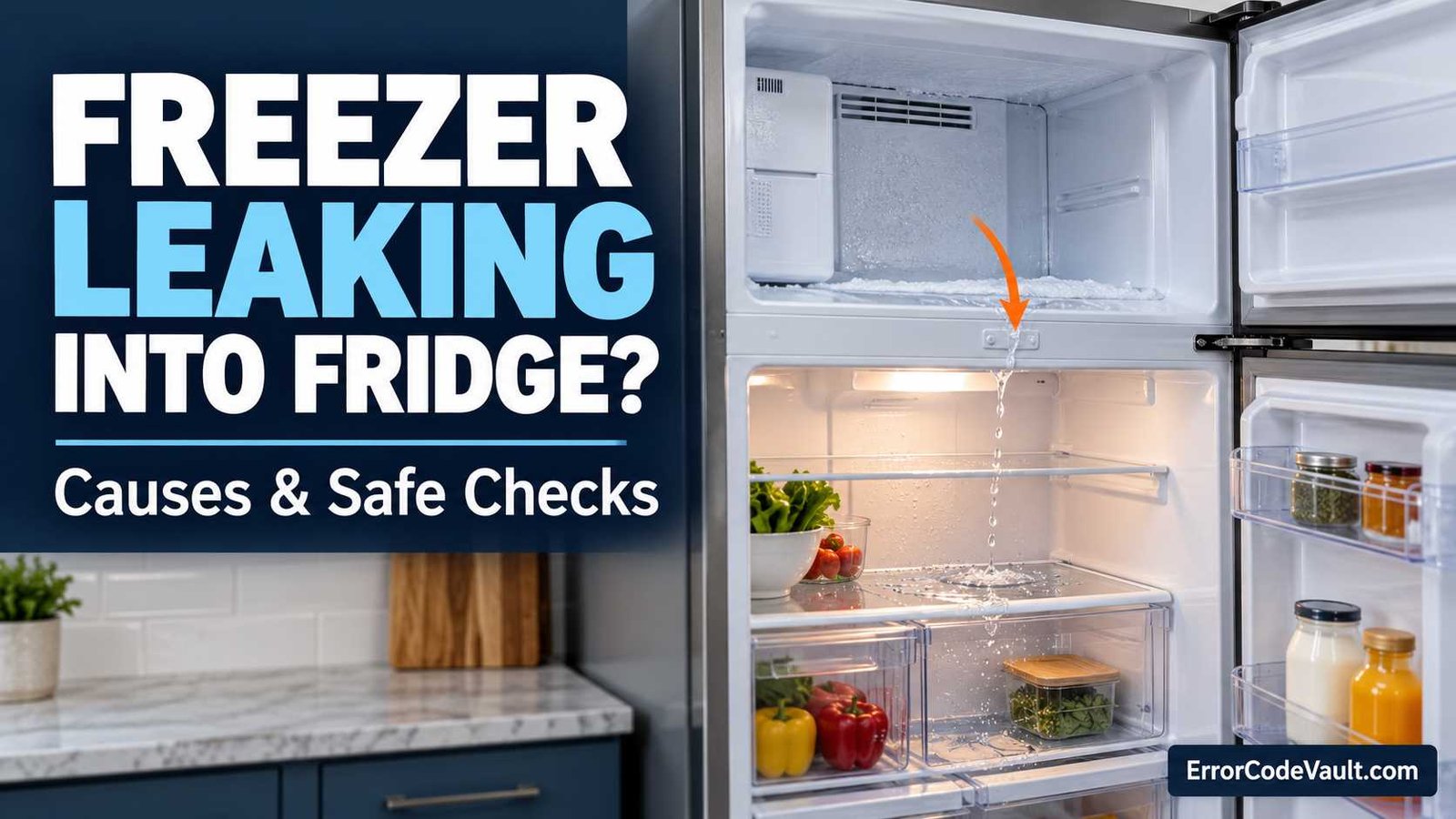
 If your freezer is leaking water into the fridge, a blocked or frozen defrost drain is one of the first possibilities to consider. During automatic defrost, meltwater normally runs through a drain into a collection pan beneath the refrigerator. If that path becomes obstructed, water can collect beneath the freezer floor, run down the back of the fresh-food compartment, or pool under the vegetable drawers. The route varies by refrigerator design, so the location of the puddle matters.
Begin by drying the visible water and checking for ice buildup, an obstructed drain opening that your owner’s manual identifies, and a door that does not close fully. Unplug the refrigerator before any permitted drain maintenance. If water reaches an electrical outlet or exposed wiring, do not touch the wet area; arrange safe isolation and professional service. Never remove an internal freezer panel or work around fans, wiring or refrigerant tubing to reach a hidden drain.
Where is the water appearing?
| What you see | Possible cause | First safe check |
|---|---|---|
| Water dripping from the freezer area into the fridge | Blocked defrost drainage path on applicable designs | Look for a recurring drip and freezer-floor ice |
| Water or ice beneath the crisper drawers | Defrost drain blockage, water reservoir or tubing leak | Check where the water first appears |
| Sheet of ice across the freezer floor | Defrost meltwater refreezing before reaching the pan | Photograph the ice and consult the model manual |
| Droplets across shelves and food packaging | Condensation from humid air entering the cabinet | Inspect door closure and gasket |
| Water appears after dispensing water or making ice | Filter, ice-maker fill line or water-system leak | Check accessible fittings without disassembly |
Why a clogged defrost drain sends water into the fridge
Frost builds up on the cooling surfaces of many frost-free refrigerators and is periodically melted during automatic defrost. A drain carries the meltwater to a pan, where it normally evaporates. Food particles, ice or other debris can restrict that drain. Water then takes another route, sometimes passing into the refrigerator compartment below.
On many top-freezer refrigerators, recurring water under the vegetable drawers or running down the rear wall is a useful clue. On bottom-freezer models, ice on the freezer floor or water in front of the freezer may be more obvious. Side-by-side and French-door models differ further, and water under the crispers can also originate from a fresh-food water reservoir. The visible symptom is evidence to investigate, not proof of one failed component.
1. Remove standing water and protect the food
Wipe up accessible water with clean towels and inspect the surrounding floor. If you need to switch the refrigerator off for manufacturer-approved maintenance, move perishable food to another refrigerator or a cooler with adequate ice. Keep refrigerator food at 40°F (4°C) or below, and frozen food at 0°F (-18°C) where possible. Discard perishable food that has spent more than two hours above 40°F (4°C), or one hour when surrounding temperatures exceed 90°F (32°C).
Do not chip away ice with a knife, screwdriver or sharp scraper. A punctured liner or refrigerant component can turn a drainage problem into a much more serious repair.
2. Look for freezer-floor ice and an accessible drain opening
With the appliance stopped and safe to inspect, look at the freezer floor and the rear area for a sheet of ice or a visible pool. Check the owner’s manual to see whether your model provides a user-accessible defrost drain. Its opening may be at the lower rear of the freezer, but on many refrigerators it is concealed behind an interior panel.
If the manual specifically permits owner cleaning of an exposed opening, follow its instructions using only recommended tools and methods. Do not pour boiling water into the freezer, force a wire into a hidden drain, use a hairdryer near standing water or remove an evaporator cover. Manufacturers such as GE recommend service where reaching the drain requires disassembly.
3. Check whether the door is letting humid air inside
Frequent door openings, food packages caught in the doorway and a damaged gasket can let warm, humid air enter. This produces frost in the freezer and moisture inside the refrigerator. Inspect the gasket around both doors for folds, tears, grime or gaps. Remove obstructions and clean the seal according to the manual.
If the door is misaligned or fails to close on its own as designed, follow model-specific leveling guidance or arrange adjustment. Do not assume condensation is coming from the defrost drain when droplets are scattered across multiple shelves rather than tracing a path down from the freezer.
4. Rule out an ice-maker or water-supply leak
A refrigerator with an automatic ice maker or dispenser has a separate household water supply. A damaged supply tube, poorly seated filter, ice-maker fill connection or water reservoir can cause a puddle that resembles a defrost leak. The timing helps: water that appears after ice making, dispensing or a filter change deserves a closer look at the water system.
Inspect only visible, accessible tubing and filter areas. If an active supply leak is suspected, turn off the accessible refrigerator water shutoff valve without moving the heavy appliance or straining its connector. Do not loosen fittings or remove built-in plumbing while the line is pressurized. A technician can distinguish a cracked reservoir from a drain blockage.
5. What if the freezer drain keeps freezing?
If water disappears after ice melts but returns within days or weeks, the drainage path may still be restricted, improperly routed or affected by a model-specific defrost or drain-heating problem. A temporary thaw is not the same as a completed repair.
Record how quickly ice returns and whether cooling temperatures remain normal. Do not install a homemade heater, move electrical wiring or modify a factory drain. Service may be needed to inspect the full drain path, the defrost system and any approved updated parts for the exact model.
Can you use the refrigerator while it is leaking?
A small amount of water inside the cabinet does not automatically mean the cooling system has stopped, but ongoing leakage should be addressed promptly to prevent floor damage, contamination and repeated icing. Confirm the actual compartment temperatures with a refrigerator thermometer. If the appliance cannot maintain safe food temperatures, move perishables to properly chilled storage.
Stop using the appliance and seek qualified help if leakage reaches electrical components, the cabinet repeatedly floods, there is a burning smell, cooling fails, or ice obstructs normal door closure. Keep children and pets away from slippery water on the floor.
When to call for refrigerator repair
- Hidden drain: The drain is behind the freezer wall, beneath a fixed cover or otherwise not accessible through approved maintenance steps.
- Recurring freezer-floor ice: The ice returns after an initial thaw or the fridge continues collecting water.
- Water-system leak: Water appears around a reservoir, filter housing, ice-maker tube or inaccessible supply connector.
- Cooling or electrical issue: Temperatures are unsafe, the unit trips power, or water reaches electrical equipment.
Provide the technician with the full model number, whether the freezer is above or below the fridge, the first location where water appears, photographs of any ice and whether the refrigerator has an ice maker or dispenser. Those clues are more useful than buying a replacement drain part without confirming the cause.
How to prevent another leak
Keep packages away from door seals and any exposed drainage area described in your manual, close the doors completely and clean the gaskets regularly. After any repair, watch the freezer floor and the area under the crisper drawers for another buildup. The most helpful distinction is between defrost water taking the wrong path, condensation from humid air and a pressurized water-supply leak. Each needs a different solution.
Daniel Brooks is a US-based appliance troubleshooting researcher with 12 years of experience studying washer, dryer, refrigerator, and dishwasher faults. He reviews manufacturer manuals and converts technical error codes into safe, practical guidance for homeowners.