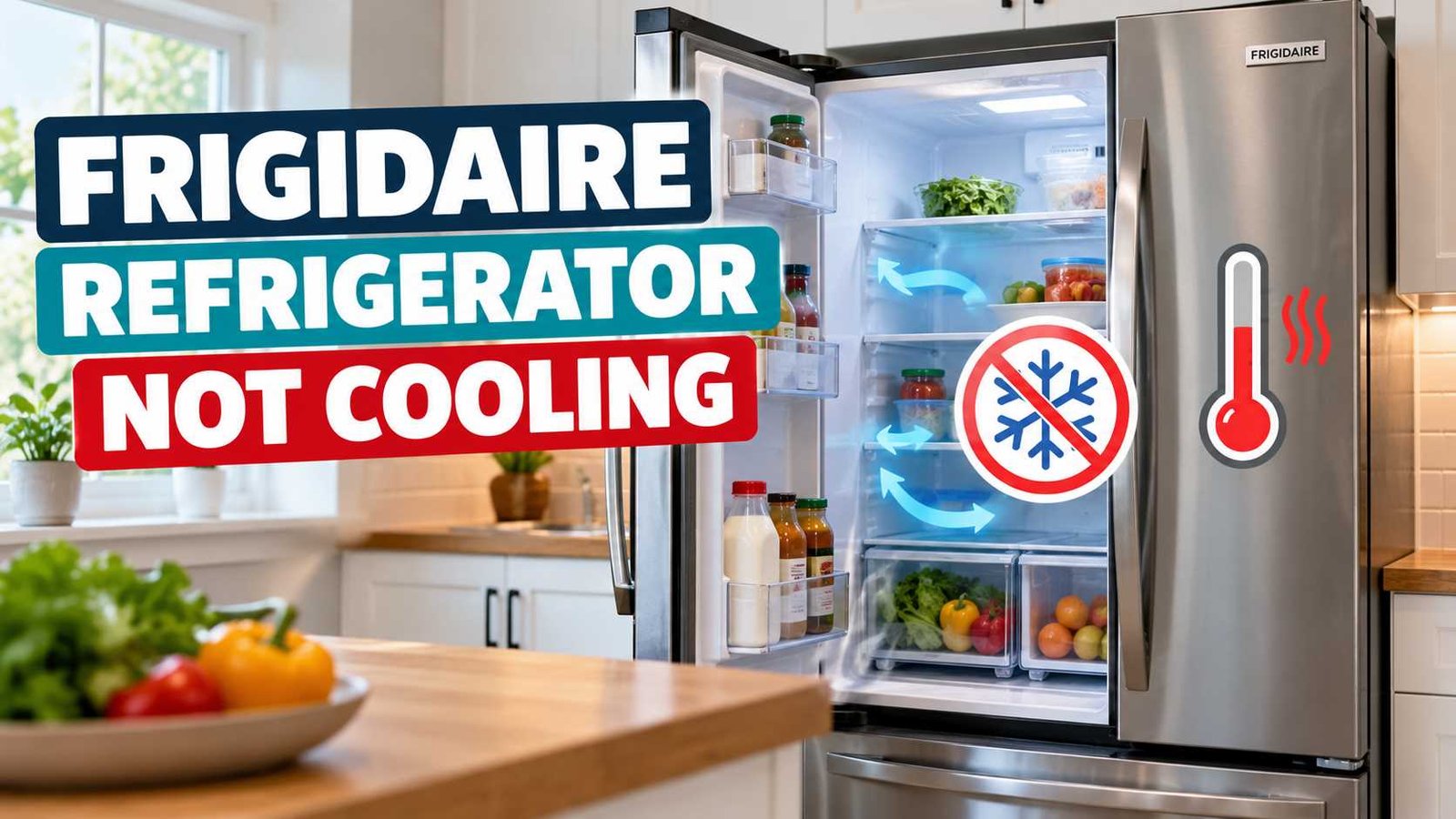
 If your Frigidaire refrigerator is not cooling, start by checking the actual compartment temperature, its settings, the door seal and the air vents. A warm refrigerator does not automatically mean the compressor has failed. The most useful next clue is whether the freezer is still cold.
Protect the food first. If the fresh-food compartment is above 40°F (4°C), move perishables to a working refrigerator or an ice-filled cooler that stays at or below that temperature. If perishable food has been above 40°F for two hours or longer, discard it. Never taste food to decide whether it is safe.
Check These Five Things First
- Measure the temperature. Place an appliance thermometer in the refrigerator and, if equipped, another in the freezer. Frigidaire’s usual electronic-control targets are 37°F (3°C) for fresh food and 0°F (-18°C) for the freezer. Some models and specialty drawers use different recommendations, so follow the model’s manual.
- Check the settings. Make sure cooling is enabled and the control has not been switched off. Look for an unusual display message or demonstration mode; the meaning and exit procedure depend on the model.
- Clear interior vents. Move containers and food packages away from air openings and allow space for circulation. Do not pack food tightly against the rear wall.
- Check the doors. Remove anything preventing full closure. Clean dirty gaskets with mild soapy water and inspect for gaps, tears or folded sections.
- Consider recent changes. A new installation, power outage, large grocery load or door left ajar can temporarily raise temperatures. Frigidaire says stabilization can take up to 24 hours after installation or an interruption; that is not a reason to keep unsafe food in a warm compartment.
Is the Freezer Cold but the Frigidaire Refrigerator Warm?
When frozen food remains solid but milk and produce are warming, start with airflow between the compartments. On many refrigerator-freezer designs, cooled air is circulated from the freezer toward the fresh-food section. The exact airflow arrangement varies by model.
Look for blocked air vents
Find the visible supply and return vents in the compartments without removing any panels. Pull tall cartons, bags and containers away from these openings. Close the doors and watch the thermometer rather than judging the change by touching a shelf.
Check for heavy frost or ice
Notice whether the freezer’s interior back wall has unusually thick frost or the vents are visibly iced over. This can restrict airflow and may indicate an air leak or a defrost-system problem. Do not chip ice with a knife, use a heat gun or remove electrical covers. Recurring heavy frost after the door-seal and vent checks warrants service.
Consider a fan or air-control fault
If the freezer stays cold but the refrigerator does not, the evaporator fan, an air damper or its control may be involved on models that use those parts. Not all designs have the same components. A technician can confirm the cause using your full model number; silence alone is not proof of a bad fan because fans can stop when doors open or during normal cycles.
What if Both the Refrigerator and Freezer Are Warm?
When neither section cools, check the power supply and operating mode before assuming a sealed-system problem. Look for working interior lighting or a live display, confirm the plug is fully seated in a suitable wall outlet, and check the home’s breaker if there is no power. Do not use an extension cord or handle a damaged plug or wet outlet.
A lighted display proves that some power reaches the appliance; it does not prove the cooling system is running. If both compartments remain warm despite correct settings and clear ventilation, possible faults include a cooling-system control, start device, condenser fan or compressor. These require diagnosis, not guesswork or repeated part replacement.
Use the Symptoms to Choose Your Next Step
| What you notice | What it may suggest | Best next action |
|---|---|---|
| Freezer cold, fridge warm | Airflow, frost buildup or a model-specific fan/damper issue | Clear vents; check door seals and visible frost |
| Both compartments warm, lights off | Power supply problem | Check plug, outlet and breaker safely |
| Both warm, lights on | Cooling disabled or cooling-system fault | Confirm controls; arrange diagnosis if temperatures do not improve |
| Cooling weak after a power outage | Normal recovery or an underlying fault | Monitor thermometers and protect food during recovery |
| Door will not close flush | Obstruction, misalignment or damaged gasket | Remove obstruction and inspect gasket; seek service if still leaking |
| Repeated thick frost | Moisture entry or defrost-related problem | Check closure; seek service if frost returns |
Check Door Gaskets, Condenser Airflow and Location
A door that looks closed can still leak warm air. With the door shut on a thin piece of paper, pull gently: some resistance generally suggests contact between the gasket and cabinet. Repeat around the perimeter. This simple check can identify suspicious sections but cannot certify an airtight seal.
Look for dust obstructing accessible exterior ventilation grilles, and make sure the refrigerator has the clearance specified in its installation instructions. If the manual calls for cleaning an accessible condenser area, unplug the appliance first and follow that procedure. Do not remove protective electrical covers, bend refrigerant lines or work around moving fans.
Garage placement can matter, too. Frigidaire cautions that some units should not operate where ambient temperature falls below 55°F (13°C). Check your model’s allowed room-temperature range rather than assuming all garage refrigerators behave alike.
How Long Should a Frigidaire Refrigerator Take to Get Cold?
Frigidaire advises allowing up to 24 hours for temperatures to stabilize after a new installation or a power interruption. A recently opened door or a large food load can also create a temporary rise. Keep doors closed as much as practical and track the thermometer readings. If a unit that has been running for roughly 24 hours is still not cooling properly, arrange service rather than continuing to wait.
Food safety uses a different clock. During an outage, a closed refrigerator generally keeps food cold for about four hours. If power was out four hours or more, discard refrigerated perishables as recommended by FoodSafety.gov. Where temperatures are known, discard perishable items that have been above 40°F (4°C) for two hours or more. A fridge that starts cooling again does not make spoiled food safe.
Does Resetting the Refrigerator Fix Cooling?
A reset may clear certain alerts, but it will not repair blocked airflow, a failed fan or a cooling-system defect. Some Frigidaire models permit acknowledging an alarm with a Clear Alerts control; reset instructions differ by product. Check the use-and-care manual before using a button sequence.
If the display shows H or HI, Frigidaire identifies this on applicable models as a high-temperature warning. Check the actual temperature, door closure and settings. Clearing the alert is not evidence that food has returned to a safe temperature.
Do not repeatedly cycle the breaker to force a restart. Stop using the refrigerator and contact qualified service if you notice a burning smell, damaged wiring, electrical arcing, or an unsafe outlet.
When to Call Frigidaire Service
Arrange professional diagnosis if both compartments stay warm after the basic checks, if the freezer works but the refrigerator stays warm with open vents, if thick frost repeatedly returns, or if you hear persistent clicking without meaningful cooling. Compressor, refrigerant, internal wiring and electrical testing are not suitable trial-and-error homeowner repairs.
Before contacting service, record the full model number from the appliance label, approximate refrigerator and freezer temperatures, when the problem started, any recent outage, and any displayed code. Describe whether the freezer is still making ice or keeping food frozen. Those details help distinguish airflow issues from whole-system cooling problems and reduce unnecessary parts guesses.
The practical order is simple: protect perishables, check measured temperatures and controls, clear vents, confirm the doors seal, and compare refrigerator cooling with freezer cooling. If the temperatures remain unsafe, stop troubleshooting at the exterior and have the appliance assessed.
Daniel Brooks is a US-based appliance troubleshooting researcher with 12 years of experience studying washer, dryer, refrigerator, and dishwasher faults. He reviews manufacturer manuals and converts technical error codes into safe, practical guidance for homeowners.