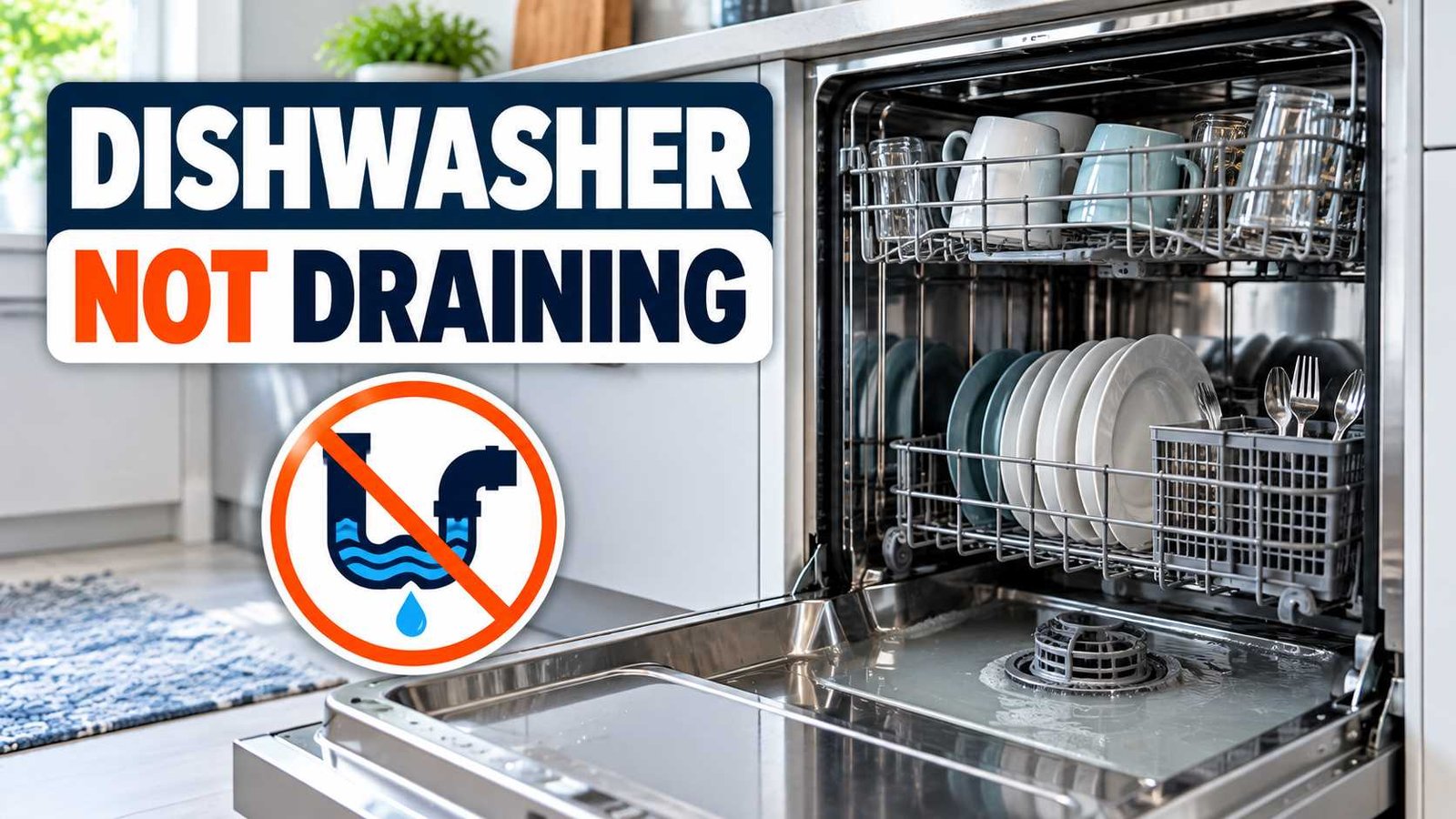
 If your Bosch dishwasher is not draining, start with the filter at the bottom of the tub. Food scraps, labels and small pieces of broken glass can restrict the filter or drain pump. A kinked drain hose or blocked sink connection can cause the same symptom. Switch the dishwasher off and disconnect it from power before reaching into the filter or pump area.
A little water below the filter opening can be normal on some models. What matters is whether water remains pooled across the tub floor after a completed cycle, spills out when you remove the filter, or triggers a drainage error. If you see leaking water, smell burning, or hear harsh grinding, stop using the appliance and arrange service.
Start with the symptom, not a replacement part
| What you notice | First place to check | What it may suggest |
|---|---|---|
| Standing water after the cycle ends | Filter and pump area | Debris blocking the drainage path |
| Water drains slowly or returns | Drain hose, air gap and sink connection | Restriction or possible backflow |
| Problem started after a garbage disposal was installed | Disposal dishwasher inlet | Knockout plug may still be fitted |
| E24 or E25 appears | Filter, pump cover and hose | Drainage fault; exact checks depend on the code and model |
| Filter and hose are clear but no drainage occurs | Professional diagnosis | Pump or another fault may need testing |
1. Clean the Bosch dishwasher filter
- Stop the cycle, switch the machine off and isolate its electrical supply. Let hot water cool before opening the bottom of the tub.
- Remove the lower dish rack. Find the filter assembly in the tub floor and follow your model’s manual to unlock and lift it out.
- Remove visible food debris. Rinse the filter under running water with a little dish soap and a soft brush. Avoid abrasive tools that can damage its mesh.
- Inspect the filter opening for loose debris without reaching blindly into it. Use a sponge to remove excess standing water if necessary.
- Refit and lock the filter fully in the position specified by the manual.
A filter that looks clean from above can still have debris caught around the mesh or beneath its housing. If clearing it solves the problem, you may not need to investigate further.
2. Check the drain pump cover for debris
On many Bosch dishwashers, the drain pump access cover is beneath the filter. The exact cover shape and removal method vary by model. Consult your owner’s manual rather than prying at a part that does not match the instructions.
- Keep power disconnected. Remove the filter and sponge out standing water so you can see the pump-cover area.
- If your manual describes user access, remove the cover as directed. Watch for sharp glass, bones or other small fragments; use suitable protection and never put fingers blindly into the opening.
- Remove loose, accessible debris only. Do not force the pump impeller or dismantle the pump.
- Replace the cover exactly as instructed. On designs that use a click-in cover, make sure it seats securely before reinstalling the filter.
If the drain pump cover is missing, broken or will not lock into place, do not run another cycle. A loose cover can itself contribute to drainage faults, including Bosch E25 on applicable models.
3. Inspect the drain hose and under-sink connection
The Bosch dishwasher drain hose carries wastewater to the household drainage system. A pinched section behind the appliance or an obstruction under the sink can prevent water leaving the machine.
- Visible hose: Look for tight bends, crushing or damage where the hose is accessible. Do not pull the dishwasher out or disconnect built-in plumbing just to investigate unless you can do so safely.
- Sink air gap: If your installation has a countertop air gap, check for evidence of food residue or water overflowing from it. Follow its maker’s cleaning instructions.
- Garbage disposal connection: If a new disposal was recently installed, its dishwasher inlet may still have the factory knockout plug. Have the connection corrected if you are not familiar with the plumbing.
- Drain connection: Gurgling or backed-up sink water can point to a household drain restriction rather than a dishwasher fault.
Drain-hose routing requirements differ by installation and region. Preserve the high-loop or air-gap arrangement specified for your model and local plumbing rules. Do not remove a high loop, bypass an air gap, or improvise a new connection to make the hose reach.
4. Understand Bosch drainage error codes
Some Bosch dishwashers display an error rather than simply leaving water in the tub. Bosch’s published US support guidance associates E24 with improper draining, often involving the filter or drain route. E25 points to a blocked drain pump or a loose or missing pump cover. E23 can indicate a drain-pump problem that needs service. Code availability and descriptions can vary across model families and regions.
Do not assume that a code proves a particular part has failed. Record the exact characters on the display, including leading zeros or additional digits, and check the manual for your model before acting. A non-code symptom can have the same simple causes.
5. Test whether the dishwasher drains again
After the filter and pump cover are correctly installed and any safely accessible hose issue has been addressed, restore power. Use the cancel/drain function or a short test cycle described in your owner’s manual. Bosch control combinations vary, so avoid relying on a generic button sequence.
Observe the result without opening panels or reaching into a running appliance. If water drains normally and no error returns, the blockage may have been cleared. If water remains, a code returns, or water backs up into the tub after the test, stop repeating cycles and investigate the external drain or arrange appliance service.
Why a Bosch dishwasher may still not drain after cleaning
Cleaning the filter does not fix every restriction. Debris can remain in an inaccessible hose section, the sink plumbing can be blocked, or the pump may not operate correctly. The pump can also be affected by a damaged or improperly seated cover.
If the dishwasher hums without moving water, makes grinding sounds, trips a breaker, or repeatedly reports a drainage error, do not attempt internal electrical checks or pump replacement without suitable professional training. A technician can distinguish a faulty pump from a blocked outlet or control problem using the correct model documentation.
Keep drainage problems from returning
Scrape substantial food scraps and remove labels from dishes before loading. Check the filter regularly and clean it when debris collects, using your owner’s manual for the correct frequency. Avoid letting broken glass or small hard objects enter the pump area, and keep the sink drain functioning properly.
The most useful order is simple: filter, accessible pump area, drain hose, sink connection, then professional diagnosis. That sequence addresses common obstructions without guessing at expensive replacement parts.

Daniel Brooks is a US-based appliance troubleshooting researcher with 12 years of experience studying washer, dryer, refrigerator, and dishwasher faults. He reviews manufacturer manuals and converts technical error codes into safe, practical guidance for homeowners.