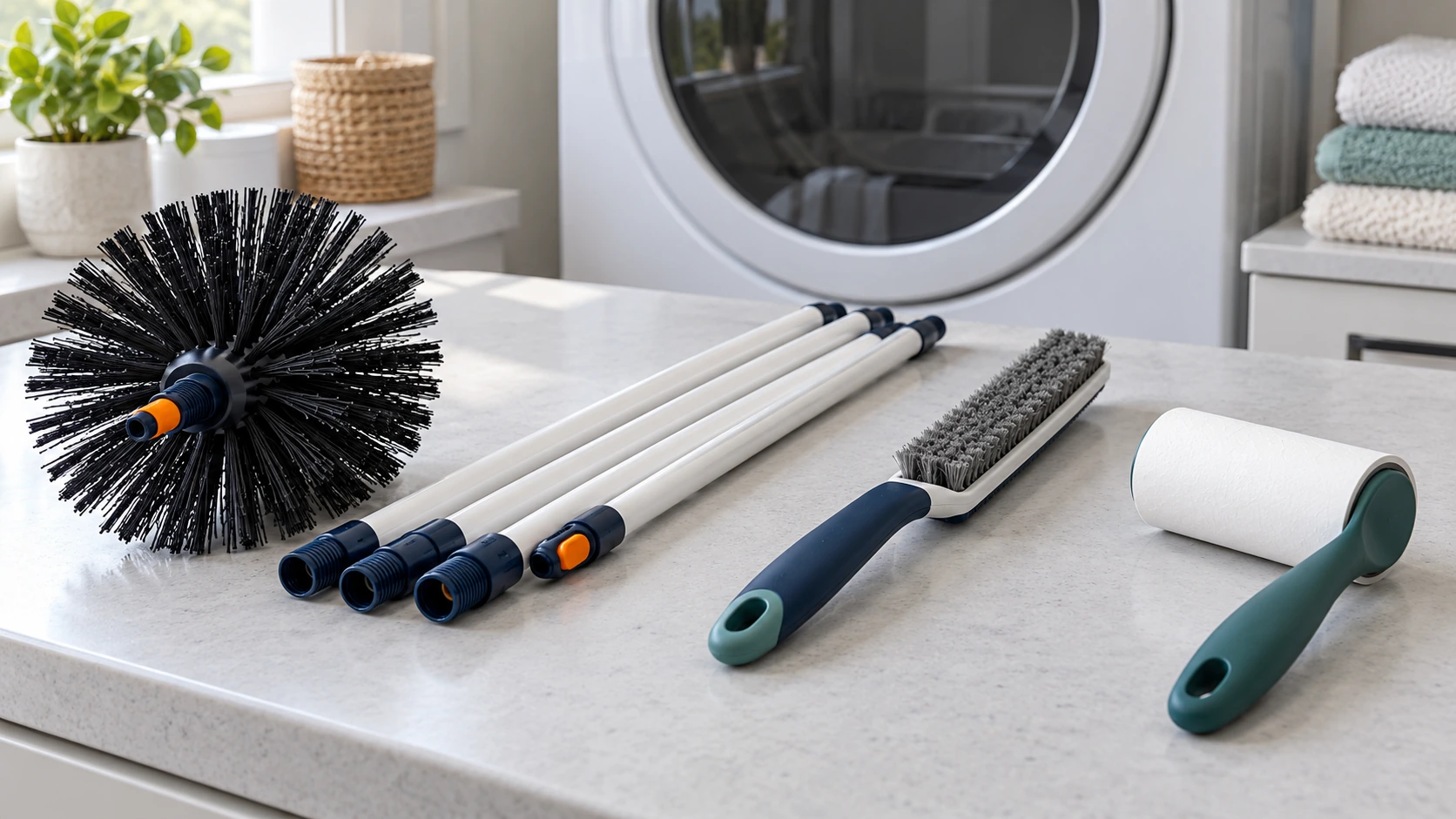
A brush for cleaning a dryer vent should be designed for the exhaust duct you intend to clean, with suitable reach and instructions for that route. A narrow lint-screen brush and a clothing lint remover do different jobs. Choose the cleaning area before choosing the tool.
Check the dryer manual and the brush or kit instructions first. Stop using a dryer that smells burnt or overheats, and arrange appropriate help rather than running it to test whether brushing worked.
Three tools that should not be confused
| Tool | Intended task | Important limit |
|---|---|---|
| Exhaust-duct brush or rod kit | Loosen lint within the accessible exhaust route. | Must suit the duct and the kit’s documented operating method. |
| Lint-screen cleaning brush | Clean the areas specified for the screen or filter. | Its name does not establish that it can clean the full building duct. |
| Clothing lint brush or roller | Remove surface lint from fabrics. | Not a substitute for an exhaust-cleaning tool. |
For example, Whirlpool’s top-lint-screen brush is described for lint and debris at the filter and vent screen. Read the actual description instead of treating the words dryer vent in a product title as proof of complete-duct capability.
Check fit, reach and the route
Confirm the brush head, rod connections and approved use against the actual duct and cleaning-kit instructions. Know where the exhaust terminates and whether both ends can be reached safely. Do not choose a kit solely by the largest advertised reach.
The PNNL dryer-exhaust guide describes brush kits with extending sections and removal of loosened lint by vacuum. It directs users to the kit manufacturer’s operating instructions. Do not assume every kit allows powered rotation or uses the same technique.
Use only safe, documented access
Disconnect power before maintenance. Do not disturb a gas connection or strain connected utilities to reach the duct; obtain qualified help when moving the dryer would require that work. Roof access and concealed or difficult routes also need an appropriate professional plan.
Stop if the brush catches, the duct is damaged or the route is uncertain. Forcing a tool does not establish that an obstruction has been removed. Do not push a brush through a lint-screen opening unless the appliance instructions permit that access.
Judge the result beyond the lint collected
Removing lint from one accessible section does not prove the complete route and termination are clear. Confirm that any disturbed duct connection is properly restored before normal use, following the installation instructions.
If drying remains slow, use our drying-time troubleshooting guide and arrange inspection of inaccessible sections. Cleaning-tool selection cannot resolve crushed ducting or an internal appliance fault.

Ahmad Raza is the website administrator and content operations manager at Error Code Vault. With 11 years of experience in technical publishing, he manages site accuracy, author verification, source quality, updates, user feedback, and editorial compliance.