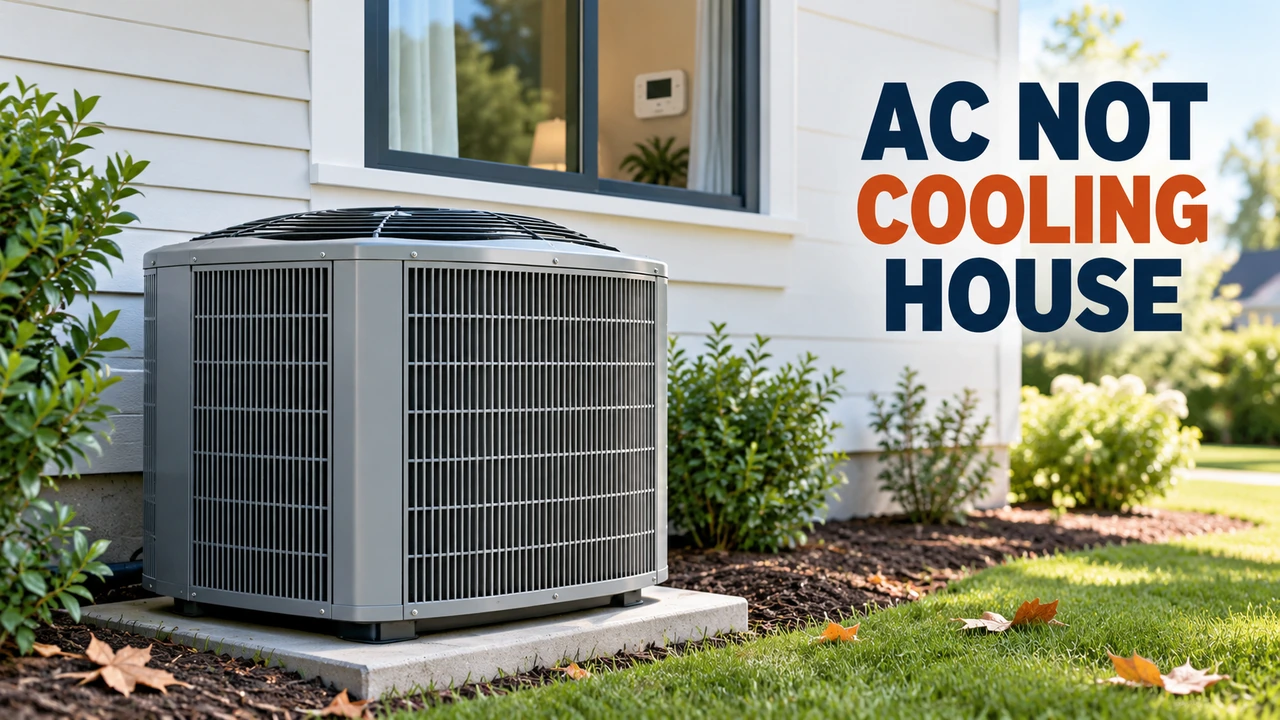
 If your AC does not cool the house, check the thermostat before assuming the air conditioner has failed. Set it to Cool with a target temperature below the current indoor reading, and select Auto for the fan where appropriate. Next, inspect the return-air filter and look for blocked vents or debris around the outdoor unit. These are safe, useful first checks when a central air conditioner is running but the house stays warm.
Turn the system off if you see ice on refrigerant tubing, hear a harsh new noise, notice an electrical burning smell or find water reaching electrical equipment. Never open electrical cabinets, handle refrigerant lines, bypass switches or work on a capacitor. If indoor temperatures are becoming dangerous during extreme heat, move to a cooler place instead of waiting for a repair.
What is the AC doing?
| What you notice | Where to look first | What it may suggest |
|---|---|---|
| Air blows, but rooms stay warm | Thermostat, outdoor unit, filter | Fan-only operation or inadequate cooling |
| Airflow is weak at most vents | Return filter and supply grilles | Airflow restriction or indoor blower problem |
| Some rooms cool, others stay hot | Room vents, sun exposure, ductwork | Uneven distribution or high heat gain |
| Outdoor unit appears silent during a cooling call | Thermostat and any visible fault message | Power, control, or outdoor-equipment issue |
| Ice appears on a line or indoor coil area | Stop cooling and call for assessment | Restricted airflow or refrigerant-related problem |
| System runs for hours without reaching the setpoint | Filter, outdoor clearance, house heat gain | Reduced capacity, high demand, or sizing issue |
1. Check the thermostat settings and schedule
Confirm the mode reads Cool, not Heat, Off or Fan Only. The desired temperature must be below the indoor temperature for a normal cooling call. On many central systems, setting the fan to Auto makes the blower run with heating or cooling rather than moving unconditioned air continuously.
Review any programmed schedule, away mode or smart-thermostat override. Check batteries if your thermostat uses them and its display is blank. After a change, allow the normal equipment delay to pass; some systems intentionally delay compressor startup for protection. Lowering the setpoint dramatically will not make a properly operating fixed-capacity system cool faster.
2. Inspect the air filter and accessible vents
A clogged return-air filter reduces airflow across the indoor coil. It can make the system less effective and, in some conditions, contribute to coil icing. Switch the system off and locate the filter according to the equipment instructions. Replace a disposable filter with the specified size and airflow rating, or clean a reusable filter only as the manufacturer directs. Reinstall it before operating the unit.
Walk through the rooms and make sure supply registers are not covered by furniture, rugs or curtains. Check accessible return grilles too. Do not close large numbers of vents in an attempt to push more cold air elsewhere: some duct systems can develop airflow and pressure problems when registers are shut.
3. Check the outdoor condenser without opening it
If you have a central split system, the outdoor unit releases heat from the house. Leaves, grass clippings, vegetation and stored objects close to its cabinet can restrict airflow. From a safe distance, look for obvious obstructions and listen for unusual sounds. With the system shut off, clear loose debris from the surrounding ground and maintain the clearance required in its installation instructions.
Do not put fingers through the grille or touch a fan that may start automatically. Avoid pressure washers, aggressive coil sprays and removing access panels. Coil cleaning beyond the simple exterior maintenance allowed by your manual is a technician’s task. If the outdoor fan is not operating during a genuine cooling demand, or the unit is repeatedly starting and stopping, arrange service rather than attempting electrical tests.
4. Check whether the house is cooling at all
Keep doors and windows closed during a test and give the system a reasonable opportunity to operate. Note the thermostat’s indoor reading and whether supply air feels cooler than room air. Do not rely on a single vent temperature or a supposed universal temperature difference as proof of refrigerant charge: airflow, humidity, measurement position and system design affect results.
During very hot weather, an otherwise functioning system may struggle to hold an unusually low setpoint, especially in a poorly shaded or insulated home. Close sun-facing curtains, reduce avoidable indoor heat sources and use fans for comfort. Fans move air rather than lowering the room’s temperature, so turn them off in empty rooms.
5. Look for clues of a frozen indoor coil
Ice on the visible insulated refrigerant line, a sudden drop in supply airflow or water appearing after a period of poor cooling can suggest icing. Dirt-restricted airflow is one possible cause; low refrigerant flow or charge can also be involved. The symptom does not tell you which component is responsible.
Switch cooling off and arrange professional evaluation. Do not chip ice away, heat the tubing or reopen the air handler to reach the coil. If your manufacturer explicitly allows using the indoor fan to thaw a frozen coil, follow those instructions, but do not resume repeated cooling runs while the cause remains unresolved.
6. Understand why one room stays warmer
If the living room cools but a bedroom does not, the problem may be distribution rather than lost cooling capacity. Check whether the bedroom register is open and unobstructed, whether the return-air path is restricted and whether direct afternoon sun is heating the room. A duct in an attic or crawlspace can also be kinked, disconnected or leaky.
A professional can inspect airflow, duct leakage, insulation and room-by-room cooling load. Air sealing and shading may improve comfort when the AC is working but heat enters faster than a particular room can be cooled. Do not climb into unsafe attics or cut into ducts to investigate.
Why the AC may run continuously without cooling enough
An air conditioner that seems to run all day could be facing unusually high outdoor heat, restricted airflow, dirty coils, a refrigerant leak, duct losses or a mismatch between installed capacity and the home’s cooling load. Long cycles alone do not diagnose a broken compressor. Variable-speed systems may deliberately run for extended periods at low output.
Refrigerant is part of a sealed circuit, not a consumable that should require periodic topping up. If a technician finds a low charge, ask about locating and correcting the underlying leak and confirming the correct charge for the system. Refrigerant handling requires appropriately qualified service personnel and must follow local rules.
When the system needs professional diagnosis
- No improvement after basic checks: Thermostat, clean filter, clear vents and outdoor clearance appear normal, but the house still does not cool.
- Outdoor equipment is not running: The thermostat calls for cooling but the outside unit remains inactive or repeatedly cuts out.
- Ice or repeated water leakage: Stop cooling and request an inspection of airflow, drainage and refrigeration performance.
- Electrical or mechanical warning signs: Repeated breaker trips, burning smells, buzzing or grinding should not be investigated by opening panels.
- Persistent room-to-room differences: Ask for airflow, ductwork and room-load assessment instead of changing parts blindly.
When booking service, record your equipment model number, thermostat settings, indoor and outdoor conditions, which rooms are warm and whether both indoor and outdoor units operate. Those details help the technician distinguish cooling-system faults from airflow or building issues.
Keep the home cooling more reliably
Check filters at the interval recommended for your system, keep outdoor equipment free of debris and schedule maintenance when needed. Keep the supply and return paths clear. For homes with persistent comfort problems, improving shading, air sealing and duct performance may matter as much as the equipment itself.
The useful order is thermostat, filter, vents, outdoor clearance, then professional assessment. If basic airflow and controls are sound but the house remains warm, stop guessing at refrigerant or electrical parts and have the cooling performance measured properly.

Daniel Brooks is a US-based appliance troubleshooting researcher with 12 years of experience studying washer, dryer, refrigerator, and dishwasher faults. He reviews manufacturer manuals and converts technical error codes into safe, practical guidance for homeowners.