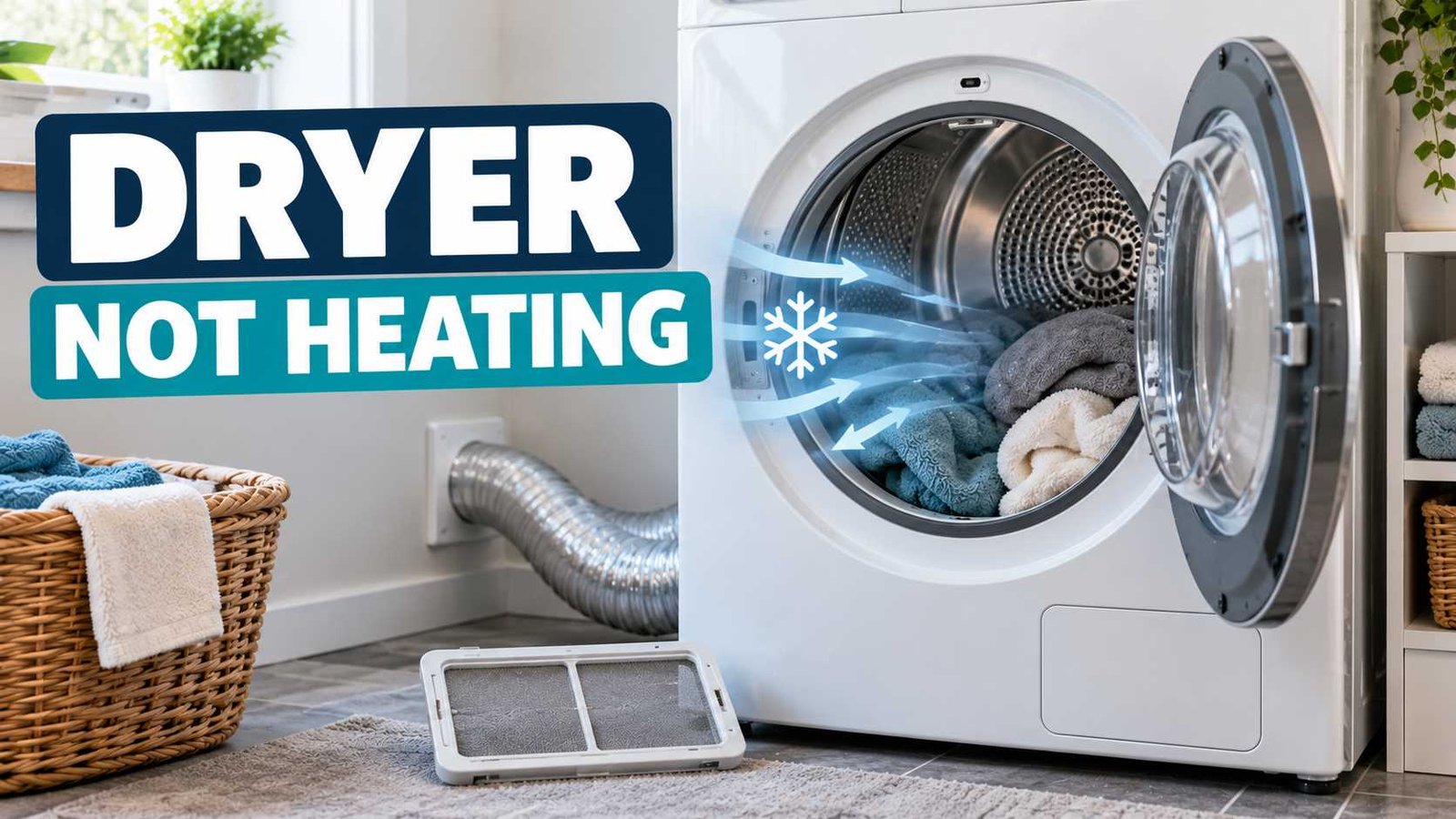
 If your LG dryer will not heat up but the drum still turns, first check whether you selected a heated cycle, then inspect the lint screen and exhaust vent. LG says restricted airflow is a common reason for weak drying performance. If the drum stays completely cold, an electric-supply or heating-system problem is also possible; gas models need a different set of checks.
Stop using the dryer if you notice smoke, a burning odor, scorched parts, a damaged power cord or repeated breaker trips. If you smell gas, leave the area without touching switches or trying to operate the appliance, then call your gas utility or emergency service from outside. Do not investigate a suspected leak yourself.
Check whether the LG dryer has no heat or just dries slowly
These are different symptoms. A dryer that tumbles but produces no warmth may have a power, gas-supply, control or heating-component problem. A dryer that feels warm yet leaves towels damp is more likely to need an airflow, load or sensor-drying check.
Choose a heated Timed Dry or Speed Dry setting if your model offers one, not Air Dry or a cool-down setting. Allow the cycle to start normally, then stop it before checking carefully for warmth. Do not rely on touching the exterior cabinet, and follow the model manual for any prescribed heat test. Heat-pump models may operate at lower temperatures than conventional resistance-heated or gas machines.
Five safe things to check before replacing parts
- Check the cycle and heat setting. Air Dry and cool-down stages do not add heat. Make sure a temperature option has not been set to no heat.
- Clean the lint filter. Remove lint before each load. If residue coats the mesh, clean and dry the filter as the manual directs before reinstalling it.
- Inspect accessible venting. Turn the dryer off. Look for a crushed or tightly bent transition duct and lint obstructing the outside vent hood. Do not run a gas dryer with its exhaust disconnected indoors.
- Reduce an oversized load. Clothes need room to tumble. Very wet laundry from a poor washer spin cycle will also require more drying time.
- Identify the heating type. Check the model label or owner’s manual to determine whether yours is a conventional electric, gas, ventless condenser or heat-pump dryer. Not every following check applies to every design.
Why an LG electric dryer can spin but not heat
Many North American conventional electric dryers need a 208- or 240-volt supply for the heater, while the drum motor can sometimes run when one side of the supply is lost. LG’s power troubleshooting advice distinguishes the two breakers commonly serving an electric model from the single breaker often used with a gas model. Exact electrical requirements depend on the model and market.
If you can safely identify the dedicated dryer breaker, check whether it has tripped. Follow its labeled normal reset procedure once only if there are no signs of damage or overheating. If it trips again, stop and call an electrician. Never remove the terminal-block cover, open a receptacle or measure live supply voltage yourself.
Is the LG dryer heating element burned out?
A failed element can cause no heat in a conventional electric dryer, but the symptom does not identify that part. A technician may need to check the incoming power, heating assembly, temperature sensor, thermostat, cutoff and control system using the exact model’s service documentation. Ordering a heating element without confirming the supply can waste money and leave a dangerous fault untouched.
Why an LG gas dryer runs without producing heat
A gas dryer needs electricity to tumble and gas to heat. If the household gas supply is interrupted or an accessible shutoff valve is closed, the drum may still turn. Only inspect a valve you can identify and reach without moving the appliance, and only when there is no gas smell. Do not loosen pipe connections, attempt ignition or remove burner covers.
If gas is available but a conventional gas dryer remains cold, ignition and burner components may require diagnosis by a qualified gas-appliance technician. A failed igniter, gas-valve component or sensor is a possibility, not a diagnosis that can be made from drum movement alone.
What LG Flow Sense d80, d90 and d95 warnings mean
On equipped LG vented dryers, the Flow Sense system can report restricted exhaust airflow. LG identifies d80, d90 and d95 as indications of increasingly serious duct restriction. Other supported displays may show d75 or illuminated Flow Sense bars. These warnings concern the exhaust path and should not automatically be interpreted as a failed heating element.
Clean the lint screen, check the visible transition duct for crushing, and inspect the accessible outdoor termination. If a warning remains, have the duct professionally inspected and cleaned. Long vent runs, excessive elbows, hidden lint and unsuitable duct materials may require correction under the installation instructions. Error-code availability and meanings can vary by model; record the exact display before requesting service.
LG dryer symptoms and next steps
| What you notice | What it may indicate | Safer next step |
|---|---|---|
| Drum turns but remains cold on a heated cycle | Missing heat supply or a heater/control fault | Identify electric or gas model; check only accessible supplies |
| Electric model tumbles without heat | Partial electrical supply or failed heating component | Check labeled breakers; arrange electrical or appliance service |
| Gas model tumbles without heat | Closed gas supply or burner-system problem | Inspect only a clearly identified accessible valve; call gas service |
| Clothes remain damp although drum gets warm | Lint blockage, vent restriction, overload or sensing issue | Clean filter and accessible vent, then try an appropriate load |
| d80, d90 or d95 appears on supported model | Restricted exhaust airflow | Stop and investigate vent restriction; arrange duct cleaning if needed |
| Drying ends unusually early on a sensor cycle | Small load or moisture-sensor reading issue | Try a suitable Timed Dry cycle and follow sensor-care instructions |
Why LG sensor dry may stop before clothes are dry
Automatic cycles use moisture sensing to decide when to end. An unusually small load may not make consistent contact with the sensors; residue can also interfere with readings. LG notes that small loads can end earlier than expected on some models. A suitable timed cycle can help distinguish a sensor-cycle issue from complete loss of heat. Clean moisture-sensor surfaces only as directed in the manual, with the machine off.
Can a thermal fuse or thermostat stop the heat?
Some dryer designs use thermal fuses, cutoffs and thermostats to protect against overheating. Their effects vary by model: a protective failure might stop heat, prevent the motor from running or trigger another fault. A dryer that spins is not proof that a particular fuse has failed.
Never bypass a fuse, thermostat, door switch or other safety device. If a protective component has opened, a technician must also investigate underlying causes such as restricted airflow. Replacing parts without correcting overheating can be unsafe.
Does an LG dryer reset restore heat?
A reset may help with a temporary control or power interruption, but it cannot clear a blocked duct or mend a damaged heater. LG provides reset guidance for certain power problems; that is not a universal remedy for every no-heat complaint. Use only the sequence specified for your model, and never repeatedly reset a tripping breaker or dismiss a recurring airflow warning.
When to stop checking and book a repair
Request service if a suitable heated cycle remains cold after the easy checks, the exhaust warning persists after accessible cleaning, or the appliance overheats. Gas burner work, electrical supply testing and internal disassembly require qualified professionals. If you own a ventless heat-pump model, describe that clearly to the repair provider because its heating system and maintenance points differ from a conventional vented machine.
Have the full model number ready, along with the exact display code, the cycle tested and whether the dryer produces no warmth or simply takes too long to dry. Those details help distinguish a power or airflow problem from a heating failure without guessing at replacement parts.
Bottom line: start with a real heated cycle, a clean lint screen and clear accessible airflow. Then use the model’s heating type and any displayed Flow Sense code to decide whether the next call should be for vent cleaning, electrical service or an appliance technician.
Daniel Brooks is a US-based appliance troubleshooting researcher with 12 years of experience studying washer, dryer, refrigerator, and dishwasher faults. He reviews manufacturer manuals and converts technical error codes into safe, practical guidance for homeowners.