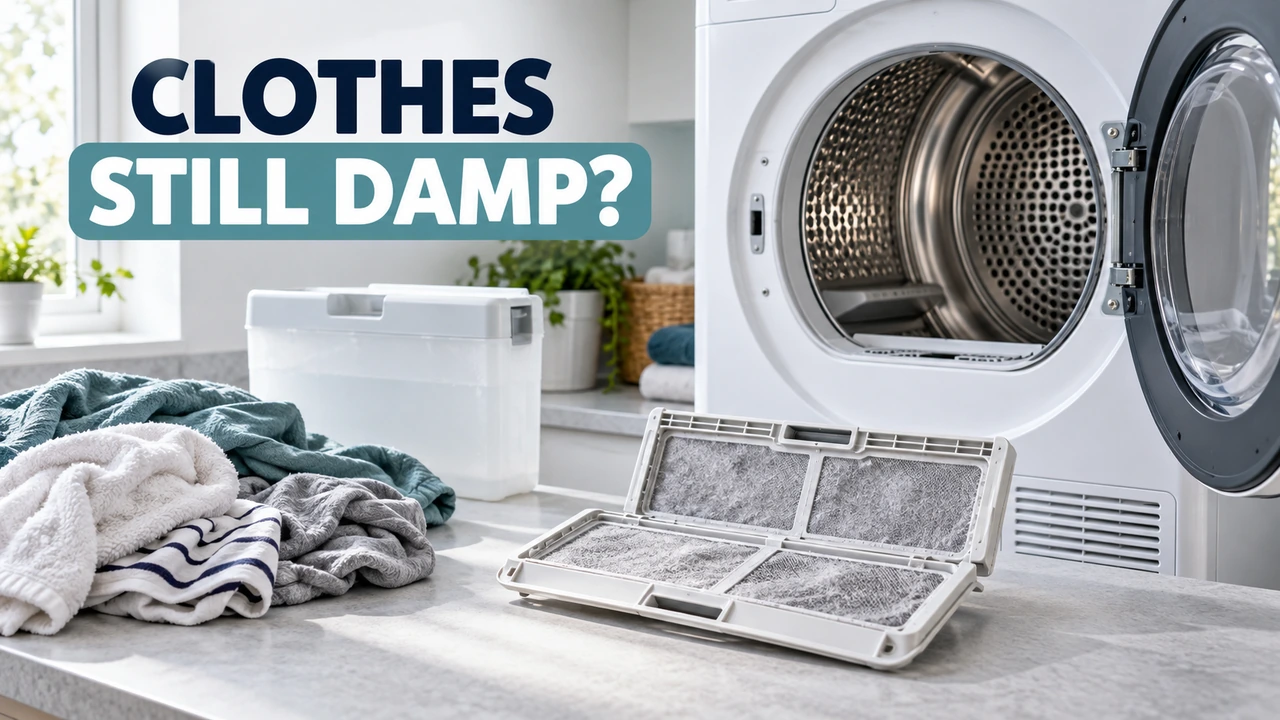
 If your tumble dryer is not drying clothes properly, clean the fluff filter first, then check the programme, load size and how wet the laundry was when it went in. For condenser and heat-pump dryers, also check the water container and any user-accessible secondary filter. A vented dryer needs a clear exhaust route. These checks often explain damp clothes without assuming the heater has failed.
Stop using the dryer if you notice smoke, a burning smell, unusually high cabinet temperatures, repeated electrical trips or a gas smell. Do not open electrical panels, bypass safety devices or run a vented dryer with its exhaust disconnected. If a gas leak is suspected, leave the area and contact the gas emergency service from a safe location.
First identify what is going wrong
| What happens | Most useful first check | What it may mean |
|---|---|---|
| Clothes are warm but damp | Fluff filter, load size and moisture-removal path | Heat is present, but moisture may not be leaving efficiently |
| Clothes are cool and wet | Programme and model-specific heat behaviour | No-heat selection or possible heating fault; heat pumps run cooler |
| Programme ends too soon | Load size, dryness setting and sensor cleanliness | Automatic sensing may not suit the load |
| Cycle takes much longer than before | Filters, water tank, condenser or vent | Restricted airflow or poor condensate removal |
| Only towels or bedding remain wet | Load mix and tangling | Heavy fabric or items wrapped inside larger pieces |
1. Clean the fluff filter before another cycle
A filter coated with fluff slows airflow, so moisture takes longer to leave the fabric. Switch the dryer off and let it cool. Remove the filter from its position near the door opening, clear the fluff and refit it securely. Some models have two filter sections; clean both if your instructions show them.
Fine residue from laundry products can also coat the filter mesh. If the manufacturer permits washing, rinse or gently wash the filter as directed, dry it fully and replace it before running the appliance. Never operate the dryer without a correctly installed, undamaged filter.
2. Choose a programme that matches the laundry
Check whether you selected Iron Dry, a delicate programme, a lower dryness level or an energy-saving option. Iron Dry intentionally leaves some moisture so clothing is easier to iron. Cupboard Dry or Extra Dry may suit certain permitted loads better, but always follow the garment care labels.
If a sensor programme ends while a small load remains damp, try a suitable timed programme as described in the manual. One or two lightweight items may not make reliable contact with the moisture sensor. Do not compensate by choosing maximum heat for fabrics that cannot tolerate it.
3. Give clothes enough space to tumble
An overfilled drum leaves damp fabric bunched together. A single large duvet cover can also wrap around smaller items, so the outside feels dry while clothing trapped inside remains wet.
- Keep within the maximum dry-load weight for the selected programme, which may be lower than the machine’s headline capacity.
- Separate thick towels and bedding from light synthetic garments where practical.
- Shake out sheets before loading and untangle them if the manual permits a mid-cycle pause.
- Check the washing machine’s spin result. Clothes that are dripping wet need a suitable spin or drainage check before drying.
Warm laundry can feel damp just as a cycle finishes. Spread an item out and let it cool briefly before deciding whether it truly needs more drying.
4. Check the right moisture-removal system for your dryer
Vented tumble dryer: inspect the exhaust path
Vented models release humid air outdoors through a duct. Inspect only accessible areas for a crushed or kinked hose and look for obvious lint at the outside vent hood. A blocked or excessively long exhaust run can leave laundry damp despite noticeable heat. If the duct is concealed, difficult to reach or visibly obstructed, arrange proper vent cleaning.
Keep the appliance installed with the vent materials and route specified in its instructions. Do not direct moist exhaust into the room or disconnect the duct as a troubleshooting test.
Condenser tumble dryer: empty the water tank and follow the cleaning instructions
Condenser dryers collect extracted water in a removable container or send it to a drain. Empty and reinstall the tank as directed, particularly if a full-container warning appears. Some models have a removable condenser that the owner can rinse; others do not. Clean only the parts your particular manual identifies as user-serviceable.
If the water tank stays unexpectedly empty, first confirm whether the dryer drains directly to household plumbing. Otherwise, persistent poor drying or a drain warning may need service rather than dismantling the condensate pump.
Heat-pump tumble dryer: expect gentler heat, but maintain the filters
Heat-pump dryers generally work at lower temperatures and can take longer than older vented or conventional condenser machines. A cooler drum at the beginning of the programme is not proof of failure. Let the cycle finish without repeatedly opening the door, which can extend drying time.
Check the main filter, any accessible fine filter or filter mat, the condensation container and the installation clearances. Some heat exchangers are sealed or self-cleaning. Never force out a fixed exchanger, touch delicate fins or spray water into the cabinet. Ambient-temperature and ventilation requirements vary by model, so use its installation guide.
5. Check the moisture sensor if an automatic cycle stops early
Some dryers measure moisture using metal sensing surfaces near the drum opening. Residue from fabric-care products or limescale can affect readings. With the appliance switched off and cool, identify the accessible sensor using the manual and clean it only by the specified method. Avoid steel wool, sharp scraping and unapproved chemicals.
If a normal, appropriately sized damp load still ends the programme prematurely, note whether a timed programme behaves differently. That information can help a technician; it does not confirm that the sensor itself has failed.
What if the dryer is running but not heating?
First rule out a no-heat setting and remember that heat-pump machines may feel relatively cool. If a suitable heated programme leaves a conventional vented or condenser dryer completely cold, possible causes include a heater, thermostat, thermal protection device or control fault. On a gas dryer, an ignition or gas-supply problem is another possibility. The diagnosis depends on the exact model.
Do not attempt live voltage tests, internal wiring checks, gas-valve work or refrigerant-system repairs. Replacing a heating element or sensor without identifying the cause can waste money and overlook an overheating problem.
When the display shows a filter, tank or airflow warning
Read the warning alongside the model’s instructions. A filter icon may be a routine end-of-cycle cleaning reminder, while a water-container warning can mean the container is full or that condensate cannot be transferred normally. Vented dryers may show a restricted-airflow message. Error symbols and meanings are not universal, so do not interpret an unfamiliar code using another brand’s list.
When to call for repair
Book an authorised or suitably qualified repairer if the dryer remains ineffective after checking the load, programme, filters and accessible drainage or exhaust path. Service is especially important if it stops with repeated fault codes, fails to heat on the appropriate programme, makes unusual mechanical noises, or cannot remove condensation. Avoid repeated cycles when overheating or electrical symptoms are present.
Have the model number, dryer type, displayed warning, selected programme and details of the wet load ready. Those observations help separate normal heat-pump timing from a blocked airflow path, a water-handling issue or a failed component.
Prevent damp loads from becoming routine
Clear the fluff filter after each cycle, empty the condensation tank when required, maintain only the accessible condenser or heat-pump filters listed in the manual, and keep external venting clear on vented models. Load similar fabrics together, avoid overfilling the drum and make sure laundry is properly spun before drying.
The key distinction is whether the problem comes from the clothes and selected programme, restricted airflow or water removal, or a genuine heating or sensing fault. Working through those possibilities in that order gives you useful answers without opening a potentially hazardous appliance.

Oliver Grant is a UK appliance diagnostics writer with 10 years of experience covering washing machines, boilers, dishwashers, and tumble dryers. He specializes in fault-code interpretation, model-specific checks, and clear guidance based on official technical documentation.